How Do Whales Survive Hurricanes: Nature’s Resilience
When a Category 5 hurricane barrels across the Atlantic with 160 mph winds and 40-foot waves, most marine life has nowhere to go. But for whales—some of the largest animals on Earth, often swimming directly in the storm’s projected path—survival is not just possible, it’s a testament to millions of years of evolutionary adaptation. As climate change increases the intensity and frequency of Atlantic hurricanes, understanding how whales navigate these extreme weather events offers critical insights for both marine conservation and human storm preparedness. This guide breaks down the science behind whale hurricane survival, from their pre-storm behavior to the physical traits that keep them safe, and what we can learn from their resilience.
We’ll dive into real tracking data from marine biologists, break down the specific adaptations that protect whales from storm surge and turbulence, and explore how changing ocean conditions are reshaping these survival strategies for the future. You can also read our guide on if you want to survive past read this guide.
Pre-Storm Warning: How Whales Detect Hurricanes Before They Hit
Sensory Cues That Signal Approaching Storms
Whales do not have access to human weather forecasts, but their highly tuned sensory systems let them detect approaching hurricanes 24 to 72 hours before the storm makes landfall—often long before the first clouds appear on the horizon. They pick up on subtle environmental shifts that are invisible to most other animals, including drops in barometric pressure sensed through their sensitive skin and inner ear, shifts in water temperature and salinity as cold, deep ocean water mixes with warm surface water ahead of the storm, and the low-frequency rumble of storm waves, which travel hundreds of miles through water at speeds of up to 1,500 meters per second.
Research from the National Oceanic and Atmospheric Administration (NOAA) shows that many whale species begin altering their behavior 24-72 hours before a hurricane makes landfall, after picking up on these subtle environmental cues. NOAA's marine mammal program tracks these behaviors across more than 40 cetacean species to better understand how extreme weather impacts ocean life. Many whales also detect changes in ocean currents and the sudden scattering of their prey (small fish, krill, and squid) to deeper water, another clear sign that a storm is approaching. You can also read our guide on survive a storm storm shelters.
Active Survival Behaviors During Hurricane Conditions
Evasive Movement And Route Adjustment
The first line of defense for most whales is to move out of the storm’s path entirely. Long-term satellite tagging data from marine biologists shows that many migratory whale species adjust their routes by dozens of miles to avoid the core of an incoming storm, rather than pushing through turbulent waters. Coastal species like gray whales often take this a step further, moving into sheltered bays, estuaries, or shallow coastal areas ahead of the storm, where wave action is reduced by the shoreline.
To conserve energy for the effort of relocation and post-storm foraging, whales cut non-essential movement by up to 60% during the storm’s peak, avoiding fast, high-energy swimming unless absolutely necessary. This energy conservation is critical, as hurricanes often scatter their prey for days after the storm passes, forcing whales to rely on stored blubber reserves to survive. You can also read our guide on what boat can survive a hurricane.
Deep Diving To Escape Surface Turbulence
The surface layer of the ocean (the top 10 meters) is where the most violent wave action, wind chop, and storm surge occur during a hurricane. Below 50 meters, wave energy dissipates almost entirely, even during a major Category 5 storm, making deeper water a safe refuge for whales. Most whales will dive to depths of 100 to 300 meters during the worst parts of a storm, staying at depth for hours at a time, only surfacing briefly for 1 to 2 minutes to breathe before returning to calm water below.
The exact dive depth varies by species: smaller toothed whales like pilot whales may only dive to 30 to 50 meters, while larger sperm whales can dive to 300+ meters to avoid even the strongest storm surge. The table below breaks down how depth impacts whale safety during hurricane conditions:
| Depth Level | Conditions | Whale Behavior |
|---|---|---|
| 0-10 meters | Extreme wave action, wind chop, storm surge risk | Limited surface breathing only, high injury risk |
| 10-50 meters | Reduced wave action, moderate turbulence | Short dives for shelter, used by smaller whale species |
| 50+ meters | Calm, stable water with no wave impact | Extended dives for safety, used by larger whale species |
Social Cohesion And Communication Adjustments
Whales are highly social animals, and their group bonds are a critical survival tool during storms. During hurricanes, pods stay in tight formation to reduce disorientation, with mothers keeping calves extremely close to avoid separation in choppy water. They also modify their vocalizations to communicate effectively in turbulent, sediment-heavy water: instead of the long, complex songs used for mating, they use short, low-frequency clicks and calls that travel farther through murky water, helping them maintain group cohesion and avoid obstacles even when visibility is near zero. You can also read our guide on can you survive a hurricane with a life jacket.
In practice, this social cohesion reduces individual risk: whales that stay with their pod are far less likely to become stranded or injured during a storm, per tracking data from marine research groups.
Physical Adaptations That Support Hurricane Survival
Streamlined, Hydrodynamic Body Design
Whales’ evolutionary history in the open ocean has given them a suite of physical traits that make surviving storms far easier. Their fusiform (spindle) shape reduces drag by up to 30% compared to a similarly sized non-streamlined animal, letting them swim efficiently through choppy, high-resistance storm water without expending extra energy. Their large, powerful tail flukes generate enough thrust to push through strong storm currents, while their pectoral fins act as stabilizers to keep them oriented in rolling waves.
Their thick layer of blubber (up to 11 inches thick in some species) also provides critical protection: it acts as insulation against the 5-10°F drop in water temperature that often accompanies hurricane upwelling, and cushions them against minor impacts with floating debris or rough waves.
Advanced Sensory Systems For Low-Visibility Conditions
During hurricanes, underwater visibility drops to near zero due to heavy rain, sediment runoff, and wave chop, so whales rely almost entirely on sound to navigate. Their echolocation systems can detect objects as small as a golf ball from hundreds of meters away, even in murky storm water, helping them avoid floating debris, shallow areas, and other members of their pod. Their acute hearing also lets them detect the subtle changes in water pressure and current that signal an approaching storm, as well as the location of their pod members even when they can’t see them.
A common misconception is that whales get disoriented by storm noise, but in practice, their auditory systems are adapted to filter out constant low-frequency noise (like waves) and pick up on the distinct, transient sounds of prey, predators, and pod members, making them far more resilient to storm-related sound disruption than most other marine animals.
Energy Conservation Mechanisms
Whales have a unique physiological adaptation called voluntary bradycardia, which lets them slow their heart rate by up to 90% when diving or resting. This reduces their oxygen consumption and lets them conserve energy for long periods, a critical trait during hurricanes when food is scarce and movement is energetically costly. During storms, whales minimize all non-essential activity, floating at depth with minimal movement to save energy, rather than constantly swimming to fight strong currents.
They also reduce their feeding activity during the storm, as their prey is often scattered by turbulent water, relying on stored blubber reserves to get through the 24 to 48 hours of peak storm conditions. This energy-saving strategy ensures they have enough strength to resume foraging and migration once the storm has passed.
Environmental Factors That Impact Whale Survival
Ocean Depth And Coastal Geography
A whale’s location during a hurricane is one of the biggest predictors of its survival odds. Whales in deep, open ocean (water depths over 200 meters) have far higher survival rates during hurricanes, because deep water dissipates wave energy completely below the surface, with no turbulence at depth. In contrast, whales in shallow continental shelf waters (less than 100 meters deep) experience much stronger turbulence even at depth, as wave energy reflects off the seafloor and creates chaotic, fast-moving currents.
Coastal features like barrier islands, bays, and estuaries act as natural storm shelters, reducing wave height by 50 to 70% in sheltered areas, which is why coastal whales often seek out these spots before a storm hits. The primary risk for whales in shallow areas is being pushed ashore by storm surge, which can result in fatal strandings, especially for young, sick, or injured individuals.
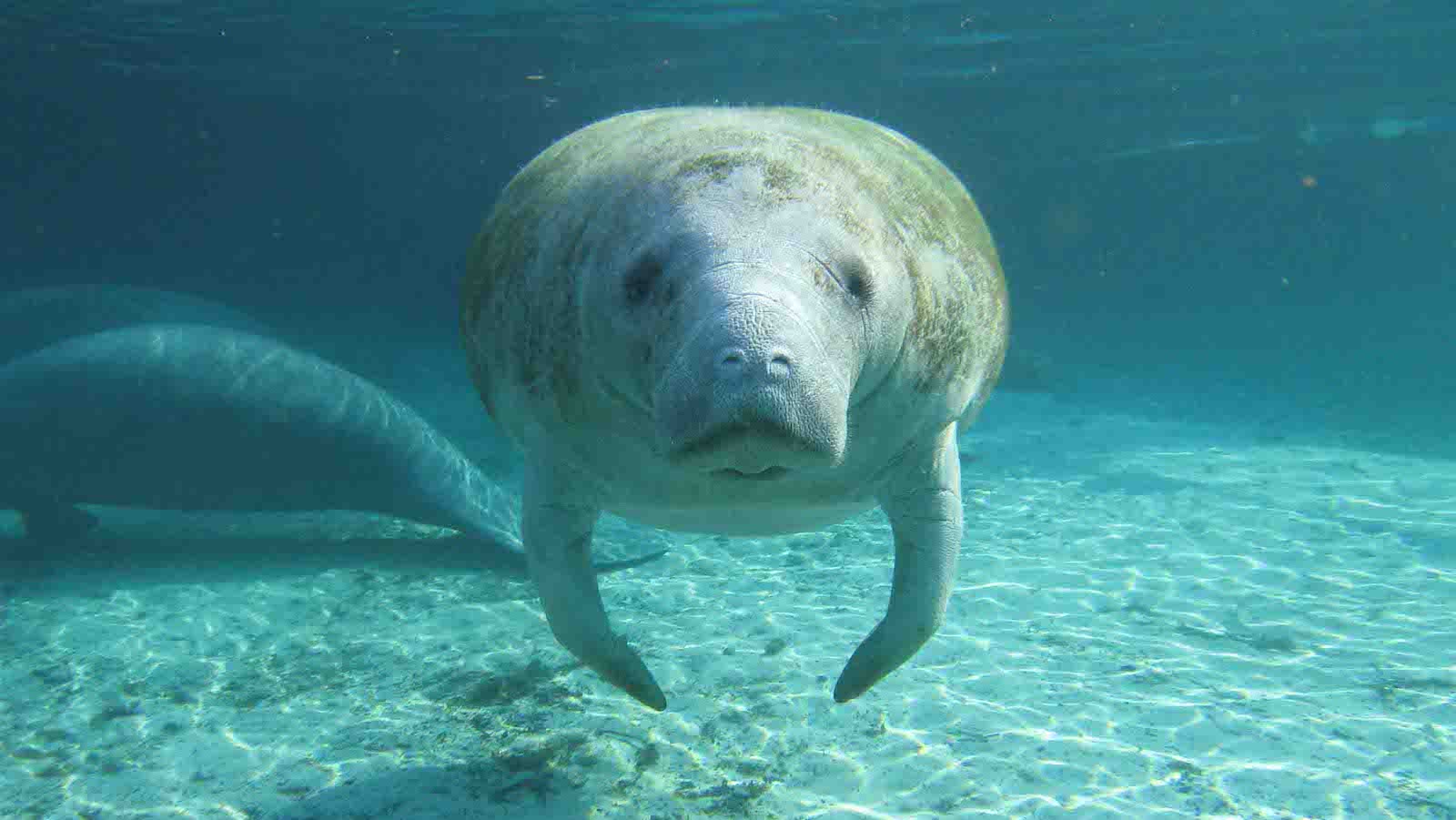 Coastal whales and manatees often take refuge in shallow bays and estuaries during hurricanes, where wave action is reduced by the shoreline.
Credit: environmentamerica.org
Coastal whales and manatees often take refuge in shallow bays and estuaries during hurricanes, where wave action is reduced by the shoreline.
Credit: environmentamerica.org
Storm Intensity And Duration
Not all hurricanes pose the same level of risk to whales. Category 1 and 2 hurricanes, with wind speeds under 110 mph and wave heights under 15 feet, pose minimal risk to most whale populations, as even surface-dwelling whales can navigate the mild turbulence safely. But Category 3+ major hurricanes, with wave heights over 20 feet and winds over 110 mph, can displace whales hundreds of miles from their normal range, separate mothers from calves, and destroy critical coastal feeding and breeding habitat.
Long-lasting storms are far more dangerous than fast-moving ones: slow-moving hurricanes that stall over an area for 3 or more days exhaust whales’ energy reserves and increase the risk of separation from the pod. After a major storm, whales may take days to weeks to return to their normal habitat, depending on how far they were displaced.
Pre-Storm Habitat Availability
Access to sheltered pre-storm habitat is one of the biggest factors in whale survival during hurricanes. Whales that have access to protected bays, lagoons, or deep fjords have a 70% higher survival rate during major hurricanes than those that rely on open ocean habitat, per tracking data from marine research groups. These sheltered areas not only reduce wave action, but also provide access to food sources that are less affected by storm turbulence, so whales can continue to feed while waiting out the storm.
The loss of these critical habitats due to coastal development, dredging, and pollution is a growing threat to whale survival during hurricanes, as more whales are forced to stay in exposed open water during storm events.
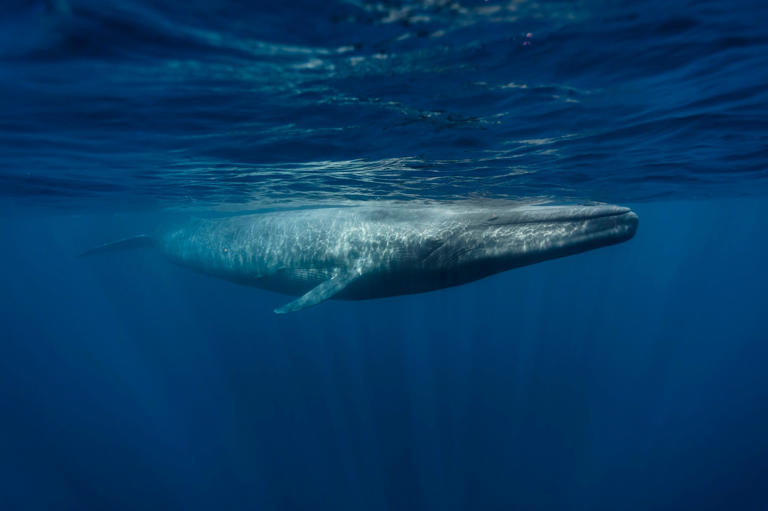
 Diving to depths of 100+ meters allows whales to escape the violent surface wave action caused by hurricane-force winds.
Credit: news.mongabay.com
Diving to depths of 100+ meters allows whales to escape the violent surface wave action caused by hurricane-force winds.
Credit: news.mongabay.com
Climate Change And Shifting Hurricane Risks For Whales
Stronger, More Frequent Hurricanes
Climate change is amplifying the threat hurricanes pose to whale populations. Since 1980, the number of major (Category 3+) Atlantic hurricanes has increased by 20%, per NOAA data, with storms growing stronger, slower-moving, and more unpredictable as ocean temperatures rise. These stronger storms generate larger waves and stronger currents that can displace whales further, separate pods, and damage critical coastal habitat.
Warmer ocean temperatures are also expanding the range of hurricanes northward, meaning whale populations that historically had little hurricane exposure (like those in the North Atlantic and North Pacific) are now facing these extreme weather events for the first time, and may not have the same behavioral adaptations as populations that have lived with hurricanes for millennia.
Habitat Loss And Food Web Disruption
Rising sea levels are eroding coastal habitats like mangroves, salt marshes, and barrier islands that act as storm shelters for many whale species, leaving them with fewer safe places to ride out storms. Warmer ocean temperatures are also causing the prey that whales rely on (krill, small fish, squid) to move to cooler, deeper water, which means whales have to travel further to find food, and may be caught in storm systems while foraging.
Increased storm runoff from extreme weather events carries sediment, pollutants, and plastic debris into the ocean, which can reduce water quality, poison whale prey, and create physical hazards (like floating plastic) that whales can collide with during storms.
Adaptation Limits For Vulnerable Species
Not all whale species can adapt equally to increasing hurricane risk. Endangered species with small populations, like the North Atlantic right whale (fewer than 350 individuals remaining), are especially vulnerable, because a single major hurricane could displace or kill a significant portion of the remaining population. Species with slow reproduction rates (like blue whales, which only give birth once every 2 to 3 years) also cannot recover quickly from population losses caused by storm events.
Conservation groups are working to identify and protect critical storm shelter habitats for these vulnerable species, to give them the best chance of surviving increasingly frequent extreme weather.
Lessons From Whale Resilience For Human Storm Preparedness
Whales’ survival strategies offer critical, actionable lessons for human communities facing increasing hurricane risk. Their pre-storm detection behavior highlights the value of early warning systems: just as whales sense environmental cues hours before a storm hits, humans can use advanced weather monitoring to evacuate early and avoid harm. Their use of natural coastal shelters demonstrates the importance of preserving and restoring natural defenses like mangroves and wetlands, which not only protect whales, but also reduce storm surge damage for human communities by up to 70%, according to the Federal Emergency Management Agency (FEMA). FEMA's natural infrastructure program outlines how these habitats protect both wildlife and human communities from extreme weather.
Whales’ energy conservation strategy also shows the value of minimizing non-essential activity during storms to conserve resources, a key part of human hurricane preparedness. Their tight social cohesion during storms underscores the importance of community support, where looking out for vulnerable members (like the elderly, children, and people with disabilities) improves overall survival rates for everyone.
If you’re building your own storm preparedness plan, start by assembling a hurricane emergency supply list with enough non-perishable food, water, and medical supplies to last 72 hours, pack a go-bag in advance so you can evacuate quickly if ordered to do so, and stock up on durable gear that will hold up to extreme conditions. For households with specific needs, our guide to custom survival kit items ensures you’re prepared for any emergency scenario, while our breakdown of essential hurricane supplies helps you avoid missing critical items during last-minute preparations.
Frequently Asked Questions
How Do Whales Detect Hurricanes Approaching?
Whales detect approaching hurricanes using a combination of highly tuned sensory systems that pick up on subtle environmental changes hours before the storm arrives. They sense the drop in barometric pressure through their sensitive skin and inner ear, detect shifts in water temperature and salinity as storm water mixes with deeper ocean layers, and hear the low-frequency rumble of storm waves, which travel hundreds of miles through water. Many species also detect changes in ocean currents and the sudden scattering of their prey to deeper water, another clear sign that a storm is approaching. This early warning behavior mirrors the importance of monitoring official weather alerts for human storm preparedness: make sure you have a weather alert radio in your emergency kit to receive updates even if power goes out.
What Strategies Do Whales Use To Survive Hurricanes?
Whales use a combination of three core strategies to survive hurricanes: evasive movement, deep diving, and energy conservation. First, they adjust their migration or foraging routes to move away from the storm’s projected path, often traveling dozens of miles to avoid the worst conditions. Second, they dive to depths of 50 to 300 meters during the storm’s peak, where wave energy has fully dissipated and water conditions are calm. Third, they reduce all non-essential movement to conserve energy, relying on stored blubber reserves to get through the 24 to 48 hours of worst conditions, when their prey is scattered and hard to find. Mother-calf pairs also stick close together during storms, with mothers guiding calves to sheltered areas to reduce the risk of separation.
Are Whales Ever Injured Or Killed By Hurricanes?
Yes, while whales have evolved effective survival strategies, they are not immune to hurricane-related harm. The most common risks include injury from floating debris, separation of mother-calf pairs leading to calf mortality, stranding in shallow areas due to storm surge, and habitat loss that reduces available food and shelter in the storm’s aftermath. Endangered species with small populations are especially vulnerable to population-level impacts from major hurricanes, as a single storm could kill a significant number of individuals.
Can Whales Withstand Hurricane-force Waves?
Yes, most whale species can withstand hurricane-force waves, thanks to their large size, streamlined body shape, and thick layer of blubber. Their size (most adult whales weigh between 10 and 200 tons) means they are not easily tossed around by waves, unlike smaller marine animals. Their streamlined shape reduces drag, letting them swim efficiently through choppy water, while their blubber acts as a cushion against minor impacts with debris or rough waves. However, whales in shallow coastal waters are at higher risk of being injured by storm surge, floating debris, or being pushed ashore and stranded.
Do Whales Change Migration During Hurricane Season?
Many migratory whale species do adjust their migration timing and routes to avoid hurricane-prone areas during peak storm season (June to November in the Atlantic). For example, North Atlantic humpback whales that migrate from feeding grounds in the Arctic to breeding grounds in the Caribbean often adjust their route to avoid the high-hurricane-risk Gulf of Mexico by traveling along the eastern coast of the U.S. instead. Some species also delay their migration if a storm system is predicted to form along their route, waiting until the storm has passed before continuing their journey. This behavioral adaptation has evolved over thousands of years, as whales that avoided storm-prone areas were more likely to survive and pass on their genes.
Conclusion
Whale survival during hurricanes is a masterclass in evolutionary resilience, built on a combination of pre-storm detection, active behavioral adjustments, specialized physical adaptations, and access to safe coastal habitat. While these strategies have served whales well for millennia, the increasing intensity and frequency of hurricanes driven by climate change is pushing these adaptations to their limit, especially for endangered species with small populations and limited habitat options.
The good news is that many of the strategies whales use to survive storms align with best practices for human hurricane preparedness: early warning, use of natural shelter, energy conservation, and community support. By protecting the coastal habitats that whales rely on for storm shelter, and applying these same principles to our own preparedness plans, we can build resilience for both marine life and human communities in the face of increasing extreme weather. To start building your own hurricane preparedness plan, assemble a 72-hour emergency supply kit, identify local evacuation routes, and sign up for local weather alerts to get advance warning of incoming storms.