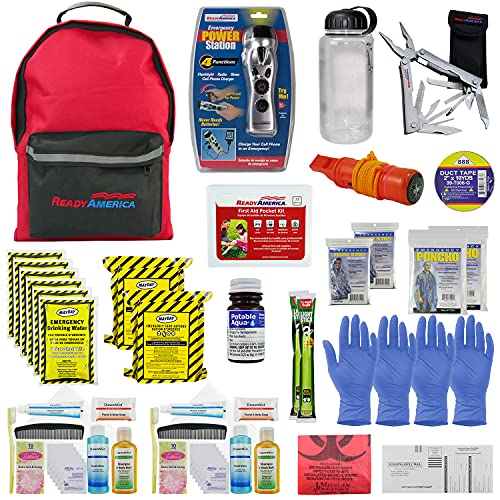
Emergency Preparedness Survival Backpack Kits for Ultimate Disaster Readiness
When the power goes out, the water main breaks, or an evacuation order lands on your phone at 2 a.m., you don't get time to shop. You get time to grab one bag and walk out the door. That bag — a 72-hour emergency preparedness survival backpack kit — is the single highest-leverage purchase in home readiness, because it turns a scattered pile of supplies into something you can actually carry.
This guide covers what genuinely belongs inside a disaster go-bag, how to judge a pre-made kit against a self-built one, how to size a pack for one person or a family of four, and how to maintain it so it still works three years from now. Then we review ten widely available kits — one-person commuter packs through four-person family bags — with the honest trade-offs each one carries.
A note before we start: no kit sold in a box is complete. Every pre-made bag we've handled needs personalisation — prescription medication, copies of documents, footwear, and a realistic amount of water. Treat a purchased kit as a strong 70% foundation, not a finished product.
Why a Backpack Beats a Cupboard Full of Supplies
Plenty of households own emergency supplies. Far fewer own emergency supplies they can move.
The distinction matters because most disasters split into two responses: shelter in place or evacuate. Pantry stockpiles handle the first. Only a packed backpack handles the second — and in fast-moving events like wildfire, flash flooding, gas leaks, or structural damage after a quake, evacuation is the likelier scenario.
Three practical reasons a backpack format wins:
- Hands-free mobility. You may be carrying a child, leading a pet, or steadying an elderly relative. A duffel occupies an arm you don't have spare.
- Decision-free deployment. Under stress, working memory collapses. Pre-packing removes roughly 40 individual decisions from the worst ten minutes of your year.
- Portability across contexts. The same pack works in a car boot, an office desk drawer, or a hall cupboard. Federal guidance from Ready.gov, the U.S. government's official preparedness programme, has long recommended keeping separate kits at home, at work, and in the vehicle for exactly this reason.
The 72-hour benchmark isn't arbitrary. It reflects the realistic window before organised outside assistance reaches most affected areas — roads cleared, utilities triaged, distribution points opened. In large-scale events that window stretches, which is why experienced preppers treat 72 hours as a floor, not a target.
What Actually Belongs in a 72-Hour Kit
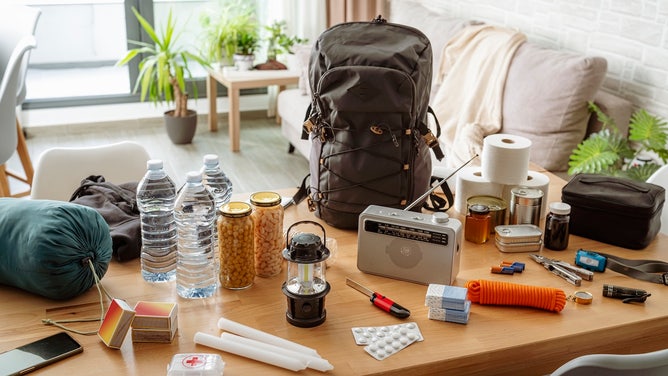
Below is the working checklist we use to audit any pack, pre-made or homemade. Sections are ordered by how quickly their absence will hurt you.
| Category | Minimum per person (72 hrs) | Notes from practice |
|---|---|---|
| Water | 3 litres carried + filtration | Carrying 3 days of water (≈12 L) is impossible; carry a day, filter the rest |
| Food | ~6,000 total calories | Calorie-dense, no-cook, no-water-required |
| Shelter/warmth | Mylar bivvy or tube tent + poncho | Wind and rain kill faster than hunger |
| First aid | Trauma-capable, not just plasters | Tourniquet, pressure dressing, gloves |
| Light | Headlamp + backup + spare cells | Headlamps beat torches; you need both hands |
| Power/comms | Battery bank, hand-crank NOAA radio | Cell networks fail before broadcast radio does |
| Sanitation | Wipes, hand gel, bags, toilet paper | The most-skipped and most-regretted category |
| Tools | Fixed-blade or folding knife, multi-tool, duct tape, cordage | One good blade beats five poor ones |
| Documents/cash | Waterproof copies + small bills | Card terminals go down with the grid |
Water: the category people underestimate
An adult needs roughly one gallon (about 3.8 litres) per day for drinking and minimal hygiene — more in heat, more if pregnant, nursing, or ill. That's over 11 kg of water per person for three days, which nobody is carrying up a hill.
The workable answer is a hybrid: carry 1–2 litres in a bottle or bladder, then pack a hollow-fibre filter (rated to 0.1 micron or finer) plus purification tablets as a chemical backup for viruses and questionable sources. Water pouches in pre-made kits are useful as a sealed, 5-year-shelf-life reserve — just don't mistake them for a supply. A typical kit's four 125 ml pouches per person is roughly one glass a day.
At home, the calculation flips entirely; there, bulk storage in food-grade containers makes far more sense, and working out how much stored water you need is a separate exercise from what rides in your pack.
Food: calories, not meals
Skip anything requiring cooking, cold water reconstitution, or refrigeration. The gold standard for go-bags is the compressed emergency ration bar — typically 2,400 or 3,600 kcal blocks with a 5-year shelf life, USCG-approved formulations, and no thirst-inducing salt load. They're bland. They also don't require a stove, fuel, or clean water, which is the whole point.
Supplement with items you'll actually want: nut butter sachets, jerky, hard sweets, instant coffee, electrolyte powder. In practice, morale food matters more than nutritionists admit — a child who refuses to eat a chalky ration bar is a real problem at hour 30.
Shelter and warmth
Hypothermia is the number one cause of preventable death in short-duration survival situations, and it doesn't require freezing weather — wet and 10 °C with wind will do it. Minimum viable shelter kit:
- Mylar emergency bivvy (the sleeping-bag shape, not the flat sheet — it traps warmth far better)
- Rain poncho that can double as a tarp
- Tube tent or lightweight two-person shelter
- Wool or synthetic hat and gloves — never cotton
- Contractor-grade rubbish bags for waterproofing, ground cover, and improvised ponchos
If your area faces high-wind events, understand where your kit ends and your building begins; a go-bag is not a substitute for a reinforced safe room during severe storms, and knowing which one you need in a given hazard is part of the plan.
First aid that matches real injuries
Most bundled first aid kits are cut-and-graze kits. Disaster injuries skew toward lacerations from broken glass, crush injuries, burns, and sprains. Upgrade any stock kit with:
- A commercial tourniquet (CAT or SOF-T) and the training to use it
- Israeli-style pressure bandage and haemostatic gauze
- Nitrile gloves, trauma shears, SAM splint
- 7 days of any prescription medication, rotated quarterly
- Personal items: spare glasses, inhaler, EpiPen, insulin cooling pouch
The CDC's public health preparedness resources are a solid free reference for medication storage limits and hygiene protocols when water is scarce.
Light, power, and information
A headlamp with fresh alkaline or lithium cells beats a torch every time. Add a compact battery bank (10,000 mAh gets most phones through 2–3 charges) and a hand-crank or solar NOAA weather radio — broadcast and NOAA Weather Radio channels typically stay up long after cell towers are saturated or dark.
Store batteries outside the devices in your pack. Alkaline cells left in a torch for three years leak and destroy the contacts. This is the single most common failure we see when people finally open a kit they bought and forgot.
Cutting tools
One reliable fixed blade or a robust folder does more work than a drawer of gadgets. Look at steel type, tang construction, and edge geometry rather than the length of the feature list — and understand what those saw-back teeth actually do before paying extra for them. Readers outside the U.S. should also check local carry law; UK buyers in particular have specific restrictions worth reviewing before sourcing a blade legally.
Pre-Made Kit vs. Build Your Own
| Factor | Pre-made kit | Self-built kit |
|---|---|---|
| Time to ready | Minutes | 5–15 hours of research and shopping |
| Cost | £50–£250 typical | Often 1.5–2× more for equivalent quality |
| Component quality | Mixed; consumables good, hardware basic | Exactly what you choose |
| Personal fit | Generic | Tailored to meds, region, family |
| Best use | Baseline you upgrade | Primary pack for experienced users |
The honest verdict: buy a pre-made kit, then spend one evening upgrading it. The consumables in commercial kits — water pouches, ration bars, mylar blankets, light sticks — are genuinely cost-effective to buy in bulk. The hardware — knives, torches, first aid contents, and often the backpack itself — is where manufacturers economise.
Our standard upgrade path on any boxed kit runs about £60–£100: replace the torch with a real headlamp, add a water filter, add a tourniquet and 7 days of meds, add a proper knife, add sanitation supplies, and swap in a better bag if the included one has taped seams and a 20 mm webbing waist strap.
If you'd rather start from zero, our breakdown of assembling a kit from scratch walks through category-by-category selection, and the companion guide on shopping smartly for components covers where spending more actually pays off.
How to Choose the Right Kit for Your Household
1. Match the person count honestly
A "4-person kit" contains four people's consumables, not four people's carrying capacity. In practice, a single 4-person bag weighing 18–20 lb (8–9 kg) means one adult carries everything while three people walk empty-handed — a poor arrangement if you get separated.
Better approach: buy individual or 2-person kits and give every capable family member their own pack. Children from about age six can carry their own snacks, torch, water bottle, and a comfort item in a small daypack.
2. Weigh it, then walk with it
Loaded pack weight guidelines that hold up in the field:
| Carrier | Sensible loaded weight |
|---|---|
| Fit adult | 20–25% of body weight |
| Average adult | 15–20% of body weight |
| Older adult / limited mobility | Under 10 lb (4.5 kg) |
| Child 6–10 | 3–5 lb (1.5–2.3 kg) |
| Teen | 10–15 lb (4.5–7 kg) |
A common mistake is optimising for contents and never testing the carry. Load your pack and walk 3 km. If your shoulders scream at 1 km, you've bought a box, not a bag.
3. Check the backpack itself
Ignore the marketing photo and look for: padded shoulder straps at least 50 mm wide, a genuine load-bearing hip belt (not a thin strap), a sternum strap, a reinforced base, and water-resistant fabric of 600D polyester or better. MOLLE webbing is genuinely useful for attaching a water bottle pouch or trauma kit externally.
4. Check consumable dating
Reputable kits use ration bars and water pouches with 5-year shelf lives, but stock sits in warehouses. Note the printed dates the day the kit arrives and write the earliest one on a label on the outside of the bag.
5. Tailor to your hazard profile
Coastal households need waterproofing, whistles, and flood-specific documents; our detailed rundown of supplies for coastal storm season covers the differences. Seismic zones need sturdy closed-toe shoes and heavy gloves stored beside the bed for broken glass. Cold climates need serious insulation. Wildfire zones need N95 respirators and eye protection.
Ten Emergency Preparedness Survival Backpack Kits Compared
| Kit | People | Standout feature | Approx. weight | Best for |
|---|---|---|---|---|
| Ready America Deluxe (2P) | 2 | Includes power station | ~2 lb listed* | Couples, apartments |
| Ready America 70280 | 2 | High-visibility red bag | ~8 lb | Car and travel kit |
| 250-Pc MOLLE Survival Kit | 1–2 | Emergency tent + tools | 4.45 lb | Outdoors and hiking |
| EVERLIT 72-Hour Bug-Out | Family | Most complete contents | ~25 lb | Serious family readiness |
| Ready America 70380 | 4 | Family food supply | 19.2 lb | Households of four |
| Ready America 70180 | 1 | Lightest full kit | 4.2 lb | Commuters, desk drawer |
| Ready America Deluxe (4P) | 4 | Power station + family food | ~3 lb listed* | Family with device needs |
| Mayday Deluxe (4P) | 4 | Long-shelf-life provisions | 18 lb | Set-and-forget storage |
| TacPreps Elite (2P) | 2 | 45L pack + water filter | Heaviest | Bug-out and extended use |
| Stealth Angel (2P) | 2 | Compact, weather-resistant | Compact | Vehicle and office storage |
*Several manufacturers list packaging or shipping weights that don't reflect the loaded pack. Always weigh a kit on arrival rather than trusting the listing.
1. Ready America 72 Hour Deluxe Emergency Kit — 2 Person

The deluxe two-person configuration bundles a small power station alongside the standard 72-hour consumables.
Best for: couples, small flats, and anyone who wants device charging built into the kit rather than added later.
The deluxe line is Ready America's upgraded tier, and the meaningful difference over the standard 70280 is the included power station for keeping a phone alive. In a modern evacuation, a charged phone is your map, your emergency alert feed, your torch, and your only way to tell relatives you're safe — so integrating power rather than bolting it on later is a genuine advantage.
Contents cover the core four: first aid supplies, a reflective survival blanket, emergency food, and drinking water for two people across three days, packed in a clear-panel bag that lets you see what you have without unpacking.
Pros
- Power station included for phone and radio charging
- First aid supplies for common wound and trauma care
- Reflective survival blanket for heat retention
- Food and water rationed for two people, 72 hours
- Slim 15 × 8 × 10 in profile fits under a bed or desk
Cons
- Three days only — no margin for a longer displacement
- Little spare volume for personal additions once packed
- Power station capacity is modest; expect a phone top-up, not a laptop
Upgrade first: add a hollow-fibre water filter and a tourniquet. Those two items close the biggest gaps.
Ready to stop putting this off? Check current pricing on the 2-person Deluxe kit and have a working go-bag by the weekend.
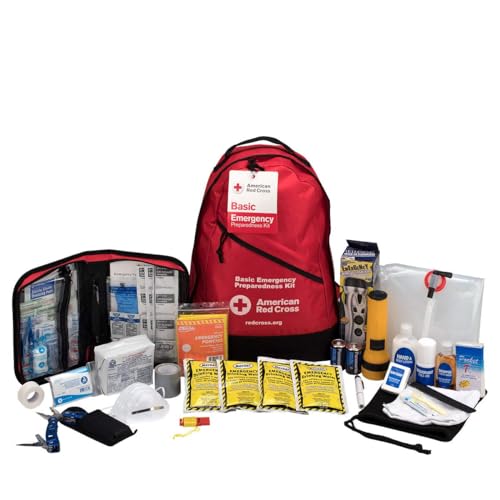
2. Ready America 70280 72 Hour Emergency Kit — 2 Person

High-visibility red makes this kit easy to spot in a dark boot or cluttered garage.
Best for: a dedicated vehicle kit, or a second bag stored at work.
This is the long-running workhorse of the Ready America range and the one we most often recommend as a car kit specifically. The bright red shell is not a styling choice — in a smoke-filled garage or an unlit cupboard, colour recognition beats brand recognition every time.
Contents run to a first aid kit, survival blanket, water pouches, food bars, light source, and hygiene basics for two people. At around 12 × 6 × 9.5 in it slots into a boot well without eating your luggage space.
Pros
- High-visibility red aids fast identification under stress
- Complete first aid module for minor injuries
- Survival blanket for hypothermia prevention
- Compact enough for permanent vehicle storage
- Sensible price point for a second or third kit
Cons
- Hardware (torch, whistle) is basic and worth upgrading
- Heavier than the listed dimensions suggest once fully loaded
- No filtration — water is limited to the sealed pouches
Field note: heat cycling in a car boot degrades food bars and batteries faster than indoor storage. Rotate vehicle-stored consumables every 2–3 years rather than at the printed expiry.
3. 250-Piece Survival Kit with MOLLE Bag and Emergency Tent
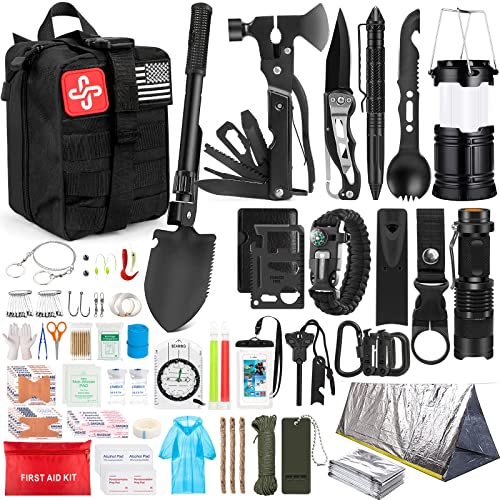
A 250-piece tool-and-first-aid set in a MOLLE-compatible pouch that clips onto a larger pack.
Best for: hikers, hunters, and people who already own a good backpack and want a modular add-on.
This one is a different animal from the boxed 72-hour kits: it's a gear and first aid module, not a food-and-water kit. The 250-piece count includes the individual plasters and swabs, so treat that number as marketing. What matters is the actual gear mix — emergency tent, fire-starting tools, cordage, multi-function tools, whistle, compass, and a fairly deep first aid section — at 4.45 lb.
The MOLLE-compatible bag is the smart part. It clips onto an existing rucksack, meaning you don't have to choose between your kit and your normal pack. Serious hikers often run exactly this arrangement.
Pros
- Emergency tent gives immediate shelter, not just a blanket
- MOLLE attachment integrates with existing packs and belts
- Strong tool-to-weight ratio at 4.45 lb
- Genuinely well-compartmentalised for fast retrieval
- Doubles as a vehicle or day-hike kit
Cons
- No food or water — you must add both
- Item count is inflated by consumables
- Several tools assume prior skill (compass, fire steel, snare wire)
- Black fabric absorbs heat in exposed storage
Pair it with a food and water module and you have a very capable system. Our guide to choosing what goes in the pack covers how to build that second half.
See the 250-piece MOLLE kit and add real shelter to your existing pack.
4. EVERLIT 72-Hour Bug-Out Bag Survival Kit

The Everlit is a fuller-featured bug-out bag — noticeably heavier and noticeably better equipped.
Best for: households that want one comprehensive family bag and accept the weight penalty.
The EVERLIT sits at the "seriously equipped" end of the market. Where budget kits stop at blanket-and-bars, this one extends into water filtration, expanded first aid, multi-tools, and shelter — the categories that separate a comfort kit from a survival kit.
That completeness comes at a cost: this is a heavy pack at roughly 25 lb loaded, in a 12 × 12 × 17 in body. That's a fine weight for a fit adult over short distances or a car-based evacuation, and a genuinely hard weight for anyone else over several kilometres on foot.
Pros
- Broadest content coverage of the kits reviewed
- Includes water treatment rather than pouches alone
- Robust backpack with real load-carrying hardware
- Organised compartments for grab-fast retrieval
- Sized for family use in a single package
Cons
- Heaviest option here — test-walk before relying on it
- Still a 72-hour supply despite the size
- No provision for prescription or specialist medical needs
- One bag means one carrier and a single point of failure
Practical fix: split the contents across two packs if two adults are in the household. Redundancy beats capacity.
5. Ready America 70380 72 Hour Emergency Kit — 4 Person

The 4-person configuration carries four sets of consumables — hence the 19.2 lb loaded weight.
Best for: a family of four keeping one central kit at home.
This is the family-scale version of the 70280, and the maths is straightforward: four people's food bars, water pouches, and blankets weigh four times as much. At 19.2 lb it's a home-storage kit that goes in the car during an evacuation, rather than a pack you shoulder for a long walk.
The first-aid module and blankets scale sensibly with the person count, and the red shell keeps the fast-identification advantage.
Pros
- Complete 72-hour provisioning for four people
- First aid supplies proportioned to group size
- One purchase covers a whole household
- High-visibility bag with clear labelling
- Straightforward to store in a hall cupboard or garage
Cons
- 19.2 lb is impractical for a single carrier on foot
- Food variety is limited; children may resist ration bars
- Concentrates everything in one bag — no redundancy
- Three-day ceiling on all consumables
Honest recommendation: for households of four, two 2-person kits usually beat one 4-person kit. Same contents, half the carry weight each, and the family stays functional if one bag is lost.
6. Ready America 70180 72 Hour Emergency Kit — 1 Person

At 4.2 lb, the single-person kit is light enough to live permanently in an office drawer.
Best for: commuters, students, office desks, and as an add-on kit for each family member.
At 4.2 lb and roughly 12.3 × 9.7 × 5.1 in, this is the kit most people will actually keep where they need it. The strongest argument for the one-person format isn't cost — it's distribution. Buy four and every family member carries their own, which is a far more resilient arrangement than a single shared bag.
Contents cover first aid, a survival blanket, food bars, water pouches, and basic light. It is deliberately minimal, and that's fine — this is your baseline, not your everything.
Pros
- Lightest complete kit reviewed at 4.2 lb
- Fits a desk drawer, locker, or under a car seat
- High-visibility red shell
- Ready straight out of the box
- Cheap enough to buy multiples for full-family coverage
Cons
- Genuinely minimal — expect to add filtration and meds
- Very little spare volume for personalisation
- One person only; no shared redundancy
- Ration bars won't suit every dietary need
The commuter version: add a folding pry bar, an N95 respirator, sturdy shoes, and a printed paper map of your walk-home route. Cell navigation is the first thing to fail.
7. Ready America 72 Hour Deluxe Emergency Kit — 4 Person

The four-person deluxe adds a power station to the standard family kit contents.
Best for: families who want one kit that also solves the phone-charging problem.
This is the deluxe tier scaled to four people: first aid, survival blankets, emergency food and water, and a power station, in a 16 × 9 × 12 in red backpack. The power station is the reason to pick this over the 70380 — during extended outages, being able to keep one phone and one radio alive is disproportionately valuable for receiving evacuation and shelter information.
Pros
- Power station integrated rather than added separately
- Four-person provisioning across food, water, and warmth
- Red high-visibility shell for rapid identification
- Backpack format allows hands-free evacuation
- Reasonably compact for its group size
Cons
- Power capacity suits phone top-ups, not sustained use
- First aid module isn't equipped for major trauma
- Consumables run out at 72 hours
- Manufacturer weight listings for the deluxe range are inconsistent — weigh it yourself
Charge discipline: cycle the power station every 3–6 months. Lithium cells left at 0% for a year may never take a charge again. Set a recurring calendar reminder the day it arrives.
8. Mayday Deluxe Emergency Preparedness Survival Backpack Kit — 4 Person

Mayday is a long-established institutional supplier; its kits show up in school and workplace preparedness programmes.
Best for: workplace, school, or church preparedness caches, and households that value long-shelf-life provisioning.
Mayday Industries has a long track record supplying institutional preparedness programmes, and it shows in the provisioning philosophy: the food and water components are chosen for stable, verifiable shelf life rather than palatability. The four-person deluxe pack weighs 18 lb and includes food, water, first aid, shelter materials, and basic tools.
If your kit's job is to sit in a cupboard for five years and still work, that emphasis is exactly right.
Pros
- Long-shelf-life food and water rations
- Complete four-person coverage in one pack
- Sturdy backpack suited to institutional storage
- Established manufacturer with commercial-sector history
- Well-compartmentalised for fast access
Cons
- 18 lb is a two-carrier or vehicle-load proposition
- Contents still require date tracking and rotation
- Black exterior is harder to locate in low light
- Institutional food choices are functional, not enjoyable
9. TacPreps 72-Hour Survival Kit — 45L Bug-Out Bag, 2 Person

A 45L pack with real load-carrying capacity and space left over for personal additions.
Best for: users who want a genuine bug-out bag with room to grow, not a sealed box.
The TacPreps is the most "backpacker" of the group. The 45L capacity is the headline: most pre-made kits ship in 20–30L bags that are full on arrival, leaving nowhere for your medication, documents, spare clothing, or footwear. 45L gives you working space.
The included water filter is the other differentiator. Filtration converts a 3-litre carry into an effectively unlimited supply anywhere there's a stream, tap, or rain — which is the single biggest capability upgrade available in this price bracket.
Pros
- 45L capacity leaves real room for personalisation
- Water filter included, not sold separately
- Extensive first aid and tool complement
- Crosses over cleanly to camping and hiking use
- Two-person provisioning in one organised pack
Cons
- Heaviest carry of the reviewed kits once fully loaded
- Over-specified for a short overnight trip
- Larger pack invites over-packing — weigh it before you trust it
- Assumes some familiarity with the tools supplied
Trade-off to accept: capacity is a temptation. The discipline of loading a 45L pack and then removing 15% of it is what makes this kit work.
View the TacPreps 45L Elite kit if you want one bag you can genuinely build on.
10. Stealth Angel 2-Person 72-Hour Emergency Kit

A compact 10 × 10 × 16 in footprint makes this an easy fit for a boot, wardrobe, or office cupboard.
Best for: apartments, offices, and vehicle storage where footprint matters more than capacity.
Stealth Angel's two-person kit prioritises a tight, weather-resistant package over maximum contents. At 10 × 10 × 16 in it slots into places bulkier kits won't go — which is the whole argument for it, because a kit stored somewhere inconvenient is a kit you won't reach in a hurry.
Contents address hydration, nutrition, warmth, and basic first aid for two people over 72 hours, in a durable black shell that protects consumables from moisture and light.
Pros
- Genuinely compact footprint for tight storage
- Weather-resistant construction protects contents
- Sensible two-person sizing for couples and roommates
- Established emergency-preparedness brand
- Grab-and-go format with no assembly required
Cons
- Compact size limits what you can add
- 72-hour ceiling like every kit in this class
- No allowance for prescription or dietary needs
- Black exterior is harder to find in the dark — add reflective tape
Maintenance: The Part Nearly Everyone Skips
A go-bag is a perishable asset. Here's the rotation schedule we'd hand to anyone starting today:
Every 3 months (10 minutes)
- Cycle the power bank / power station to a full charge
- Check prescription medication dates
- Confirm the bag is still where it's supposed to be
Every 6 months (30 minutes)
- Test every light and the radio
- Inspect batteries for corrosion; replace anything stored loose over 12 months
- Update cash, and swap clothing for the coming season
- Adjust children's clothing and footwear sizes
Every 12 months (1 hour)
- Full unpack and inventory against your checklist
- Replace water pouches and food nearing their date
- Refresh document copies (insurance, ID, prescriptions, emergency contacts)
- Load the pack and walk 3 km with it
Every 5 years
- Replace all sealed food and water rations
- Replace mylar blankets (they degrade at the folds)
- Reassess the whole kit against your current household composition
Anchor these to dates you already remember — clock changes, tax deadlines, birthdays. Kits fail from neglect far more often than from bad purchasing.
Six Mistakes That Undermine Good Kits
- Buying once and never opening it. The most common failure by a wide margin. Leaking batteries, expired food, and a dead power bank all announce themselves at exactly the wrong moment.
- Storing it somewhere clever. Loft, back of the garage, basement — all wrong. It needs to be within 30 seconds of your front door.
- Forgetting footwear. People evacuate in slippers and sandals more often than you'd think. Keep sturdy closed-toe shoes and work gloves with the pack, especially in seismic zones.
- Ignoring pets. Food, a collapsible bowl, a lead, vaccination records, and a carrier. Many shelters won't admit undocumented animals.
- Skipping documents and cash. Waterproof copies of ID, insurance policies, prescriptions, and property records, plus £100–£200 in small notes. Card systems fail with the power.
- Overloading until it's immobile. A 45 lb pack you can't carry is worse than a 15 lb pack you can. Weigh it, walk it, cut it.
Practise Before You Need It
Buying is 20% of preparedness. The other 80% is rehearsal, and it costs nothing.
- Run a two-hour blackout drill. Kill the mains at the consumer unit on a weekend evening. Use only what's in your kit. You'll find the gaps in twenty minutes.
- Do a timed grab. Set a 10-minute alarm and have everyone collect their pack, shoes, meds, and pets, then meet at the car. Repeat until it's boring.
- Eat a ration bar. Genuinely. Find out now whether your family will tolerate it.
- Filter and drink water from a garden tap or rain butt using your filter. Learn the flow rate and the backflush routine while it doesn't matter.
- Agree a rally point and an out-of-area contact. Local phone lines congest; a relative two counties away is often reachable when the person next door isn't.
Households in coastal or storm-exposed regions should also work through a season-specific checklist — the supplies a coastal household actually needs differ meaningfully from a general-purpose kit, particularly around waterproofing and documentation.
Frequently Asked Questions
What is included in a 72-hour emergency kit?
A standard commercial kit contains emergency drinking water pouches, calorie-dense food bars, a first aid module, a mylar survival blanket, a light source, a whistle, and basic sanitation items — all rationed per person for three days. Deluxe versions add a power station, an emergency tent, or a water filter. Comparing a boxed kit against a structured preparedness checklist is the fastest way to see what your particular kit is missing.
How long do emergency food supplies actually last?
Compressed emergency ration bars and sealed water pouches typically carry a 5-year shelf life from the date of manufacture, provided they're stored between roughly 15–24 °C. Storage temperature is the deciding variable: a kit in a hot loft or a summer car boot degrades meaningfully faster. Record the earliest expiry on a label on the outside of the bag and replace vehicle-stored consumables every 2–3 years rather than waiting for the printed date.
Why is a survival blanket so important?
Because hypothermia is the fastest-acting threat in most short-term emergencies, and it doesn't need freezing conditions — wet clothing, wind, and 10 °C will do it. A mylar blanket weighs under 60 g, folds to the size of a phone, and reflects a large share of radiated body heat back to you. Choose the bivvy (bag-shaped) version over the flat sheet where possible: it traps warm air rather than requiring you to hold it closed, which matters when your hands are cold and shaking.
Can I use an emergency kit for camping?
Yes, and you should — using it is the best way to find its weaknesses. Take the kit on a planned overnight and rely on its torch, first aid, shelter, and water treatment. You'll discover which items are unusable, which are missing, and how the pack actually carries. Just remember to restock every consumable the moment you get home, or you'll leave a hole in the kit for years.
Are pre-made survival kits suitable for families?
They're a good foundation, with two caveats. First, larger kits scale contents but not carryability — a 4-person bag at 19 lb needs a designated carrier or a vehicle. Second, no generic kit accounts for prescription medication, allergies, baby formula, or mobility needs. Most families are better served by individual or 2-person kits per household member, then adding personal items to each.
How much should I spend on a go-bag?
Expect £50–£120 for a solid pre-made kit per one to two people, plus £60–£100 in worthwhile upgrades (headlamp, water filter, tourniquet, sanitation, proper knife). Spending beyond roughly £250 per person generally buys comfort rather than survivability. Money is better spent on a second kit stored elsewhere than on premium versions of items you already have.
Do I need a knife in an emergency kit?
One reliable blade earns its place — cutting cordage, opening packaging, food prep, improvising shelter. Prioritise a full-tang fixed blade or a lock-tested folder from a known maker over a multi-tool with a token blade, and check your local carry laws. There's a genuine history behind the survival knife category worth understanding if you want to know why certain designs became standard.
The Bottom Line
The best emergency preparedness survival backpack kit is the one you own, have opened, have upgraded, and can carry. Nothing on this page matters if the bag stays sealed in a wardrobe until the year it expires.
If you're starting from zero, do this in order:
- Buy a pre-made kit sized to your household — a 1-person pack per family member beats one large shared bag.
- Open it the day it arrives. Inventory it, note the earliest expiry date, label the outside.
- Spend one evening upgrading it: headlamp, water filter, tourniquet, 7 days of prescriptions, sanitation supplies, waterproof document copies, cash, sturdy shoes.
- Store it within 30 seconds of your front door.
- Diarise a 6-month check before you close the laptop.
That whole sequence takes one weekend and a few hundred pounds. It's the cheapest insurance you will ever buy against the worst 72 hours you'll ever have.
Pick your kit size from the comparison table above and get it ordered today — the difference between "we should sort that out" and "it's by the door" is one decision.