Can Mushroom Spores Survive Heat? The Shocking Truth Revealed
Ask ten mushroom growers whether spores survive heat and you'll get ten different answers — usually somewhere between "they're indestructible" and "boiling water kills everything." Both are wrong.
Here's the surprise: mushroom spores are among the least heat-tolerant survival structures in the microbial world. The reputation for near-indestructibility belongs to bacterial endospores, not to the basidiospores that fall out of a mushroom cap. Confusing the two is the single biggest reason home cultivators lose grain jars to contamination, and the reason a lot of online advice about "heat-proof spores" simply doesn't hold up. You can also read our guide on can houseplants survive on indoor light.
This guide explains exactly what temperatures kill mushroom spores, why moist heat beats dry heat, why pressure cooking is still non-negotiable, and what all of this means for cooking, storage, and cultivation.

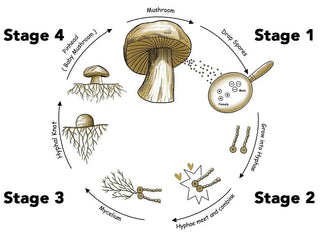
Credit: fullsendorganicks.com
Spores are microscopic, single-celled, and thin-walled — which is precisely why heat affects them so quickly.
The Short Answer
- Below 40°C (104°F): Spores survive indefinitely; many species germinate happily in this range.
- 50–60°C (122–140°F): Damage begins. Extended exposure sharply reduces germination rates.
- 65–75°C (149–167°F) for 60–120 minutes (pasteurization): Kills virtually all mushroom spores and most mould spores.
- 121°C (250°F) at 15 psi (autoclave/pressure cooker): Kills everything, including bacterial endospores.
So yes — mushroom spores can survive some heat, briefly. What they cannot survive is sustained wet heat above roughly 70°C. If you take one number away, make it that one.
What a Mushroom Spore Actually Is (And Isn't)
A mushroom spore is a reproductive cell, not a bunker. In gilled mushrooms it's a basidiospore: a single cell with a chitin-and-glucan wall, a small amount of cytoplasm, and often a pigment layer (melanin in darker-spored species such as Agaricus or Psilocybe).
Its defences are modest:
- A rigid chitinous wall that resists physical damage and drying.
- Melanin, which buffers UV and oxidative stress and gives some marginal thermal protection.
- Low free water and sugars such as trehalose, which stabilise proteins during drying.
Now compare that to a bacterial endospore (Bacillus, Clostridium), which contains a dehydrated core, a thick cortex, and dipicolinic acid complexed with calcium. That chemistry is what lets endospores shrug off ten minutes of boiling.
A very common mistake — repeated in a lot of cultivation content — is attributing dipicolinic acid to fungal spores. It isn't there. Fungal spores are protein-and-membrane structures that denature at temperatures a cook would call "poaching." Precision matters here, because the whole logic of substrate preparation depends on knowing which organism you're actually trying to kill.
The Exceptions Worth Knowing
Two groups genuinely punch above their weight:
- Ascospores of certain heat-resistant moulds (Byssochlamys, Talaromyces, Neosartorya) can survive pasteurization and are a documented headache in fruit juice processing. These are contaminants, not cultivated mushrooms.
- Some ascospores are heat-activated: a sublethal heat shock breaks dormancy and triggers germination. This is the mechanism behind "burn-site" fungi such as morels and Pyronema, which fruit prolifically on ground that has recently burned.
Moist Heat vs Dry Heat: Why the Difference Is Huge
Water is what makes heat lethal. Moist heat kills by denaturing proteins — a fast, irreversible process. Dry heat has to kill by oxidation, which is far slower.
That's why sterilization standards differ so dramatically:
| Method | Typical conditions | Effect on mushroom spores |
|---|---|---|
| Warm water (45–55°C) | Hours | Survive; some germinate |
| Hot water (60°C) | 20–30 min | Heavy losses, partial survival |
| Pasteurization (65–75°C) | 60–120 min | Effectively eliminated |
| Boiling (100°C) | 5–10 min | Killed — but bacterial endospores survive |
| Pressure sterilization (121°C, 15 psi) | 15 min (tools/liquids) to 90–120 min (grain jars) | Complete kill of all spore types |
| Dry oven heat | 160–170°C for 1–2 hours | Complete kill; needs far more time and temperature |
Practical takeaway: dry-heating a jar lid at 100°C does far less than steaming it at 100°C. If you're relying on an oven to "sterilise" anything, you need oven-sterilization temperatures, not baking-a-cake temperatures.
Why Cultivators Still Pressure Cook
Here's the part that reframes the whole question. If mushroom spores die at 70°C, why does every serious grow guide insist on a pressure cooker?
Because you're not sterilising against mushroom spores. You're sterilising against everything else.
Grain, sawdust, and manure carry Bacillus endospores, Trichoderma, Aspergillus, Penicillium, and bacterial biofilms. Those endospores laugh at boiling water. Give a jar of nutritious rye grain a 90-minute simmer and you've created a warm, sterile-looking medium in which surviving bacteria bloom into sour, grey slime within days.
Field-tested rules of thumb:
- Grain spawn and supplemented sawdust: pressure sterilise at 15 psi (121°C) — roughly 90 minutes for quart jars, longer for large or dense loads.
- Bulk substrates like coir or straw: pasteurise at 65–75°C for 1–2 hours. You want surviving beneficial microbes to compete with mould.
- Water, tools, and agar: 15–20 minutes at 15 psi is sufficient.
Over-sterilising bulk substrate is a real trade-off, not a virtue: full sterilization strips the microbial community that suppresses Trichoderma, leaving a nutrient-rich blank slate for whichever spore lands first. Extension programmes that work with commercial growers — including the mushroom research team at Penn State Extension — consistently frame Phase II composting as controlled pasteurization rather than sterilization for exactly this reason.
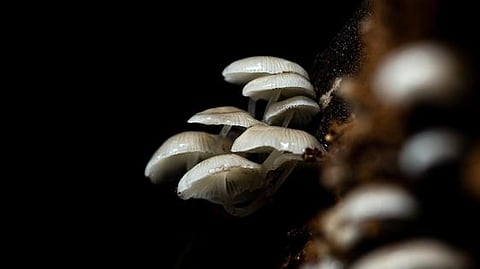
Credit: www.newindianexpress.com
Healthy fruiting bodies like these come from substrate prepared at the right temperature — not the highest temperature.
Factors That Decide Whether a Spore Lives
Time at Temperature (The D-Value Concept)
Microbiologists don't talk about a single "kill temperature." They talk about thermal death time: the minutes required at a fixed temperature to reduce a population by 90%. Every increase of about 10°C cuts that time dramatically.
This is why 70°C for two minutes and 70°C for two hours are completely different outcomes. In practice, a thermometer reading tells you almost nothing unless you also record how long the coldest part of the load held that temperature. Cold spots in a stuffed pressure cooker are the most common cause of "I sterilised it and it still contaminated."
Moisture Content
Hydrated spores die faster. Air-dried spores on a spore print, in a paper envelope, or embedded in dust are noticeably more tolerant of a heat pulse — the same principle that makes dry-packed foods shelf-stable. If you're deliberately killing spores, wet them first; if you're preserving them, keep them dry and cool.
Species and Spore Pigmentation
Tolerance genuinely varies. Dark, thick-walled spores from species adapted to sun-baked grassland or dung generally endure a heat pulse better than the pale, delicate spores of cool-forest wood decayers. Thermophilic and thermotolerant fungi that colonise compost piles at 45–55°C are a different category again — their mycelium thrives at temperatures that would kill most species outright.
Substrate and Load Density
Heat has to travel. A 2 kg dense sawdust block reaches core temperature far later than a loose bag of coir. In dense substrates it's routine for the exterior to be well past lethal while the core is still 25°C behind. Longer hold times — not hotter settings — are the fix.
Heat Sources You Actually Encounter
Cooking
Any normal cooking method obliterates mushroom spores. Sautéing at pan temperatures well over 150°C, boiling, steaming, roasting, or pressure cooking all destroy them within seconds to minutes. Dried mushrooms are the only nuance: the dust on your board or in the bag is loaded with viable spores before cooking, and it stays viable in the cupboard for months. Rehydrate and simmer, and it's gone.
Spore viability is not a food-safety hazard in the way bacteria are, either. The genuine mushroom risks are toxins (heat-stable in Amanita species), bacterial growth on improperly stored cooked mushrooms, and misidentification — which is why food-handling guidance from agencies such as the U.S. Food and Drug Administration focuses on refrigeration, cross-contamination, and sourcing rather than spores. If foraged mushrooms are ever eaten by mistake, this is a situation where timely medical intervention makes an enormous difference to outcomes; never wait for symptoms to worsen.
Laboratory and Industrial Sterilization
Autoclaves are validated with biological indicators — usually Geobacillus stearothermophilus spore strips, deliberately chosen because they're far tougher than any fungal spore. If your cycle kills the indicator, mushroom spores were destroyed long before. Steam quality, air removal, load configuration, and hold time all matter more than the gauge reading, and the same thermal-kill mathematics that underpins autoclave validation is what epidemiologists lean on when they model pathogen survival statistics.
Natural and Environmental Heat
Sun-warmed forest floor, a black plastic bag in July, or a compost pile at 60°C all sit in the "damaging but survivable" zone depending on duration. Wildfire is the extreme case: surface temperatures easily destroy exposed spores, while soil is an excellent insulator — a few centimetres of mineral soil can keep spores below lethal temperature during a fast-moving fire. That insulation, combined with heat-activated germination, explains the well-known flush of morels the spring after a burn.
Heat tolerance in soil organisms follows a similar pattern across kingdoms; the way insects endure scorching ground is largely a story about microhabitat and depth rather than raw physiological toughness.
What About Cold? The Other Half of the Story
Because it comes up constantly: cold does not kill spores the way heat does. Freezing a dry spore print or a slant at −18°C typically preserves viability, and long-term culture libraries rely on refrigeration or cryogenic storage. Damage from freezing comes from ice crystals in hydrated cells, which is why liquid cultures and fruiting bodies suffer but dry spores don't.
That's the mirror image of what gardeners deal with above ground, where a single cold snap in the garden can end a tomato crop overnight, and where protecting tender bedding plants is a matter of a few degrees. Fungi have no equivalent frost line — their limit is heat, not cold.
Storing Spores So They Stay Viable
Heat is the main enemy of spore shelf life, and it acts slowly at temperatures that feel harmless.
- Keep it dry. Fully air-dry spore prints for 24 hours before sealing; residual moisture plus warmth equals mould.
- Refrigerate, don't freeze-thaw repeatedly. 2–8°C is the practical sweet spot for prints, syringes, and slants.
- Avoid heat cycling. A syringe left in a hot car or on a windowsill for an afternoon may lose most of its viability without any visible change.
- Exclude light and oxygen. Foil-wrapped prints in sealed bags outlast loose paper by years.
- Label with the date. Viability declines gradually; prints stored properly commonly remain usable for several years, syringes for many months.
Environmental tolerance windows like this are the same puzzle indoor gardeners face when deciding whether something can manage growing under artificial illumination — the organism survives a surprising range, but performance drops long before death does.
Next step: before your next grow, put a cheap probe thermometer into the centre of your substrate and record how long it actually holds temperature. One data-logging session will teach you more about your setup than a month of forum reading.
Myths vs Facts

Credit: fullsendorganicks.com
Spores form on the gill surface and drop in the millions — which is why airborne contamination is a numbers game.
| Claim | Verdict | Reality |
|---|---|---|
| "Mushroom spores survive almost any heat" | False | They die reliably in sustained moist heat above ~70°C |
| "Boiling water always sterilises substrate" | Misleading | It kills fungal spores but not bacterial endospores |
| "Dry heat is as effective as steam" | False | Dry heat needs roughly 160°C+ for 1–2 hours |
| "Cooked mushrooms may still spread spores" | False | Normal cooking destroys spore viability |
| "Pasteurization is just weak sterilization" | False | It's a deliberate choice that preserves competitive microbes |
| "Freezing kills spores" | False | Dry spores tolerate freezing well |
| "Spores contain dipicolinic acid" | False | That's bacterial endospore chemistry |
Troubleshooting: Heat Problems and Their Fixes
- Grain jars turning grey, wet, or sour-smelling: endospore-forming bacteria survived. Extend the pressure cycle and reduce jar load per run.
- Green mould appearing days after inoculation: Trichoderma from an under-treated substrate or from the air during transfer. Fix airflow before you fix the heat.
- Pasteurised coir contaminating quickly: the hold temperature likely drifted above 80°C, wiping out the protective microflora. Aim for a steady 65–75°C.
- Spore syringe fails to germinate: heat exposure in shipping or storage is the usual culprit. Test on agar rather than blaming the grain.
- Blocks colonising unevenly: cold core during sterilization. Increase hold time rather than pressure.
Cultivation work often means long sessions in an unheated garage or basement; if that's your setup, the same practical thinking that goes into battery-heated outdoor layers applies to keeping yourself comfortable while your substrate cools under still air.
Frequently Asked Questions
Can mushroom spores survive boiling water?
For practical purposes, no. A few minutes at 100°C destroys basidiospore viability. What survives boiling is bacterial endospores and a small number of heat-resistant mould ascospores — which is exactly why boiling is not considered sterilization.
What temperature kills mushroom spores?
Sustained moist heat of 65–75°C for one to two hours is reliably lethal. Damage begins around 50–55°C, and the higher you go, the less time you need. Dry heat requires far more: 160–170°C for one to two hours.
Does pasteurization kill mushroom spores?
Yes, pasteurization kills mushroom spores and most mould spores while sparing many heat-tolerant bacteria and actinomycetes. That selective kill is the entire point — those survivors compete with contaminants in bulk substrate.
Can spores survive in soil or compost?
Often, yes. Soil insulates well, so spores a few centimetres down can survive surface fires and solarization. Compost piles that hold 55–65°C for several days will kill most fungal spores in the hot zone, but edges and cool pockets routinely stay viable.
Do spores survive drying?
Very well. Dry, dormant spores are far more heat- and time-tolerant than hydrated ones, and properly stored spore prints stay viable for years. Dryness is protective; wet heat is what destroys them.
Is a pressure cooker really necessary?
For grain and supplemented sawdust, yes. For coir, straw, or manure-based bulk substrate, pasteurization is the better choice. Matching the method to the substrate matters more than owning the biggest cooker.
The Bottom Line
Mushroom spores are tough against drying, cold, UV, and time — and genuinely fragile against sustained wet heat. They die in the 65–75°C range given an hour, which means almost nothing you do in a kitchen leaves them viable.
The shocking truth, then, isn't that spores are indestructible. It's that the heat rules most growers follow were written for bacteria, and understanding that distinction is what separates consistent, clean grows from repeated jar failures.
Put it to work: pressure sterilise grain at 121°C, pasteurise bulk substrate at 65–75°C, store spores dry and cold, and measure hold time at the core rather than trusting the dial. Do those four things and heat stops being a mystery and becomes your most reliable tool.