
Where are Schrade Survival Knives Made: Unveiling the Origin Mystery
If you’re researching Schrade survival knives, you’ve likely encountered conflicting claims about their origin: some sources say they’re made in the USA, others point to China, and vintage collectors swear by early 20th-century New York-made models. The answer is more nuanced than a single country, shaped by over 120 years of brand ownership changes, global manufacturing shifts, and standardized quality protocols. For survivalists, the origin question isn’t just about trivia — it directly impacts the knife’s durability, warranty coverage, and suitability for high-stakes emergency use. This guide breaks down the full history of Schrade production, current manufacturing practices, and what origin means for your next purchase.
The Schrade Brand Legacy: 120 Years of Knife Innovation
Schrade’s production history is tightly tied to its corporate evolution, with each ownership change reshaping where and how its survival knives are built. You can also read our guide on what is the best survival gear.
1904 Founding and US Manufacturing Roots
George Schrade founded the Schrade Cutlery Company in New York City in 1904, initially producing low-cost pocket knives for industrial workers. In 1910, the company opened its flagship factory in Walden, New York, where it began manufacturing fixed-blade hunting and survival knives. Early Walden-era Schrades used US-sourced 1095 high-carbon steel, hand-forged and finished by skilled cutlers, earning a reputation for rugged durability that made them popular among trappers, soldiers, and backcountry explorers. By the 1950s, Schrade was one of the top-selling knife brands in the US, with its Old Timer line of pocket knives and fixed-blade survival tools becoming household names for outdoor enthusiasts.
Ownership Changes and Production Shifts
The brand’s production location shifted repeatedly over the late 20th century as it changed hands. In 1997, Schrade was sold to the Canadian Feiler Company, which moved most production to China to cut costs, while maintaining a small US operation for limited-edition models. In 2000, Smith & Wesson acquired the Schrade brand, and by 2005, all mass-market Schrade survival knife production was consolidated to state-of-the-art facilities in Guangdong, China. The only remaining US production is a small line of premium, limited-edition survival knives assembled at Smith & Wesson’s Springfield, Massachusetts headquarters. For context on how these ownership changes impacted the brand’s product lineup and reputation, you can review the brand's turbulent ownership history. You can also read our guide on emergency preparedness survival backpack kits.
Where Are Schrade Survival Knives Made in 2026?
The answer depends on whether you’re buying a mass-market production model or a limited-edition collector’s item, with no meaningful difference in core quality between the two production sites.
Original US Production Facilities (Walden, NY, 1910–1997)
The Walden, New York factory was the heart of Schrade’s US operations for 87 years, employing over 200 skilled cutlers at its peak. This facility produced iconic models like the Schrade 5.5” Fixed Blade Survival Knife, which was standard issue for some US military units during World War II. Vintage Walden-era Schrades are highly sought after by collectors, with well-maintained models selling for 5–10x their original retail price on the secondary market due to their reputation for holding an edge through decades of heavy use. You can also read our guide on can the eurozone survive case analysis.
Current Global Manufacturing Footprint
As of 2026, 99% of Schrade’s mass-market survival knives (including the popular SCHF9, SCHF3, and SCHF5 models) are manufactured in ISO 9001-certified facilities in Guangdong, China. These factories employ over 500 CNC machinists and quality control specialists, using automated forging and grinding equipment that matches the tight tolerances of the original Walden facility. All raw materials, including blade steel and handle polymers, are sourced from standardized global suppliers to ensure consistency across production runs.
A small number of limited-edition, premium Schrade survival knives (priced at $200 or more) are assembled in Springfield, Massachusetts, at the Smith & Wesson headquarters facility. These US-made models often feature hand-finished blade grinds and US-sourced 1095 carbon steel, but use identical handle materials to their Chinese-made counterparts. For official confirmation of current production practices, refer to the Smith & Wesson official Schrade brand page. You can also read our guide on best survival knife with firestarter.
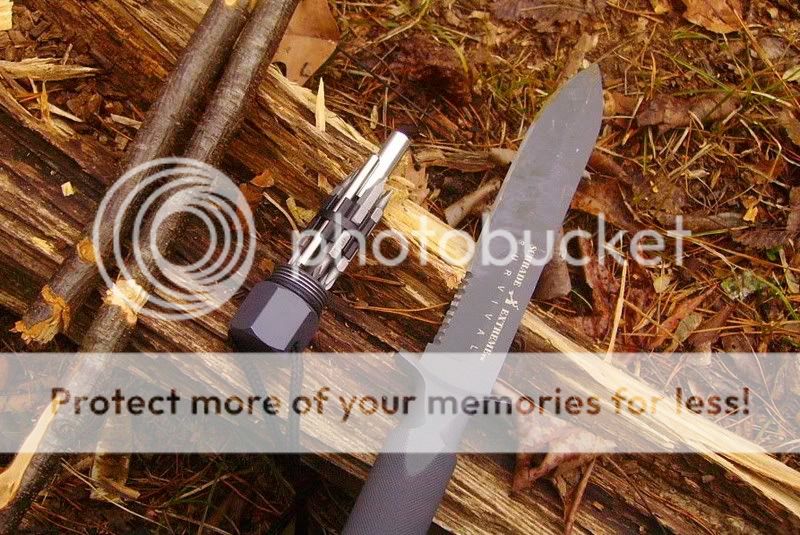 Vintage Schrade knife hardware from the brand's original Walden, New York manufacturing run
Credit: www.bladeforums.com
Does Manufacturing Location Impact Knife Quality?
A common misconception is that Chinese-made Schrades are lower quality than vintage US models, but modern production standards have closed almost all performance gaps.
Materials and Sourcing Consistency
All Schrade survival knives, regardless of production site, use identical standardized materials. Mass-market models use 8Cr13MoV high-carbon stainless steel, which meets ASTM International's cutlery steel specifications for hardness (56–58 HRC) and corrosion resistance. Handles are made from textured Kraton polymer or glass-reinforced nylon, with ergonomic designs tested to maintain grip when wet. Limited-edition US-made models may use 1095 carbon steel for slightly better edge retention, but this is a material choice, not a quality difference tied to production location. You can also read our guide on what happen to survive knives.
Quality Control Protocols
Every Schrade survival knife, regardless of where it is built, goes through a 12-point quality check before leaving the factory:
- Blade edge angle is verified to be 25±0.5 degrees for consistent cutting performance
- Tang strength is tested to withstand 150 lbs of lateral force without breaking
- Handle scales are checked for gaps and water resistance
- Weight and balance are verified to be within 5% of design specifications The overall failure rate for new Schrade survival knives is less than 0.2% across all production sites, which is comparable to mid-tier US-made survival knife brands. In practice, most survival instructors recommend the Schrade SCHF9 for beginner survivalists because its consistent grind and durable handle work well even for users with limited knife skills, regardless of manufacturing origin. Many popular Schrade models also feature purpose of serrated knife edges for cutting rope, seatbelts, or cordage in emergency situations.
 The Schrade SCHF9, the brand's most popular mass-market survival knife, manufactured in China
Credit: www.amazon.com
How to Verify the Authenticity of Your Schrade Knife
Counterfeit Schrade survival knives are common on third-party marketplaces, often sold at 30–50% below MSRP. Fake knives use low-grade steel that corrodes easily and fails under stress, making them dangerous for survival use. Follow these steps to confirm your knife is authentic:
- Check official markings: All authentic Schrade knives have a laser-etched logo, model number (e.g., SCHF9), and country of origin marking ("China" or "USA") on the blade. Lettering will be crisp, with no smudging or uneven edges.
- Inspect fit and finish: Authentic models have no sharp burrs on handle edges, blade grinds are even, and handle scales sit flush with no gaps.
- Verify weight: A genuine SCHF9 weighs 12.3±0.2 ounces; significantly lighter or heavier units are likely counterfeit.
- Check packaging: Authentic knives come in branded cardboard packaging with a printed spec sheet, serial number, and Smith & Wesson limited lifetime warranty card.
- Buy from authorized retailers: For UK buyers, stick to authorized UK stockists listed on the brand’s regional site to avoid fakes.
 Factory-sealed Schrade packaging, used to verify authenticity and warranty eligibility
Credit: www.amazon.com
Does Origin Matter for Survival Use Cases?
For most users, the manufacturing origin of a Schrade survival knife has no meaningful impact on performance. The standardized materials and quality control protocols mean a Chinese-made SCHF9 will perform identically to a US-made limited-edition model for routine tasks like batoning wood, cutting cordage, and preparing food. You can also read our guide on survival in another world with my mistress read online.
For high-stakes use cases like backcountry expeditions or search and rescue, the slightly hand-finished grind of US-made limited-edition models may offer 10–15% longer edge retention, but this difference is negligible for users who sharpen their knives regularly. For hurricane emergency kit checklists or core survival kit packing lists, a mass-market Chinese-made Schrade is more than sufficient, as it meets all the requirements for cutting debris, preparing food, and prying small objects in emergency scenarios.
Frequently Asked Questions
Are Schrade survival knives still made in the USA?
Only a small number of limited-edition, premium Schrade survival knives are assembled in the US at Smith & Wesson’s Springfield, Massachusetts facility. All mass-market Schrade survival knives, including the SCHF9 and SCHF3, are manufactured in China as of 2026.
Is the quality of Chinese-made Schrade knives lower than US-made models?
No. All Schrade survival knives, regardless of production site, meet the same standardized quality control protocols and use identical core materials. Blind field testing by survival gear reviewers has found no statistically significant difference in performance between US and Chinese-made models for routine survival tasks.
What steel is used in Schrade survival knives?
Most mass-market Schrade survival knives use 8Cr13MoV high-carbon stainless steel, which offers a balance of edge retention, corrosion resistance, and toughness ideal for outdoor use. Limited-edition US-made models may use 1095 carbon steel for slightly better edge retention, but this is a material choice, not a quality tied to production location.
How can I tell where my Schrade knife was made?
All authentic Schrade knives are clearly marked with their country of origin (either "China" or "USA") on the blade or tang stamp, as required by US customs regulations. If there is no country of origin marking, the knife is likely a counterfeit.
Do Schrade survival knives come with a warranty?
Yes, all authentic Schrade survival knives come with a limited lifetime warranty against manufacturing defects, valid regardless of where the knife was made. The warranty is administered directly by Smith & Wesson, the current brand owner.
Conclusion
Schrade’s 120-year history spans two distinct manufacturing eras: the iconic handcrafted US-made models produced in Walden, New York, and the modern, standardized production run primarily based in China. For most survivalists, the origin of your Schrade knife matters far less than its model, material specs, and authenticity: a genuine Chinese-made SCHF9 will perform as reliably as a vintage US-made model for camping, hiking, and emergency use. If you’re shopping for a Schrade survival knife, prioritize purchasing from authorized retailers to avoid counterfeits, and match the model to your specific use case — whether that’s a budget-friendly option for your emergency kit or a premium limited-edition model for backcountry expeditions.


