Survival of the Prettiest Kindle: Unlocking Beauty’s Scientific Secrets Today
Beauty is far more than a subjective measure of appearance — it is a powerful evolutionary force that shapes mate selection, social dynamics, and even survival outcomes across the animal kingdom, including humans. For decades, researchers have sought to untangle the hidden logic behind what we find attractive, separating arbitrary cultural trends from hardwired biological cues.
Nancy Etcoff’s Survival of the Prettiest: The Science of Beauty is the definitive guide to this research, and the Kindle edition offers portable, searchable access to its game-changing insights for anyone curious about the science of attractiveness. Grounded in decades of peer-reviewed work in evolutionary biology, cognitive psychology, and anthropology, the book cuts through popular beauty myths to explain why certain traits are universally appealing, how beauty standards shift across cultures, and what these preferences reveal about human health and fitness. You can also read our guide on the asshole survival guide kindle.
What Is the Survival of the Prettiest Kindle Edition About?
First published in 1999 with a 2011 reprint, the Kindle edition of Survival of the Prettiest: The Science of Beauty distills rigorous academic research into an accessible, engaging format for general readers. Unlike subjective self-help beauty books that focus on makeup, fashion, or cosmetic procedures, Etcoff’s work is rooted in empirical data from cross-cultural studies, clinical observations, and evolutionary research to answer a deceptively simple question: why do humans find certain traits attractive?
The book challenges the common misconception that beauty standards are entirely arbitrary or socially constructed, arguing instead that most core preferences are subconscious evolutionary signals of health, genetic fitness, and reproductive viability. It also explores how cultural context, media, and resource availability shape localized beauty norms, and how unconscious beauty bias impacts real-world outcomes in hiring, healthcare, and social relationships. You can also read our guide on can relationships survive medical school.
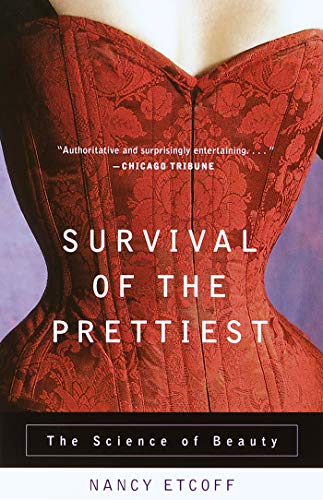
 Kindle edition cover of Nancy Etcoff’s 2011 reprint of Survival of the Prettiest: The Science of Beauty
Core Scientific Insights Covered in the Book
Etcoff’s core argument is that most universal beauty preferences are not arbitrary, but are subconscious, evolutionarily selected signals of health, genetic fitness, and reproductive viability. These cues evolved over millions of years to help our ancestors quickly identify viable mates and reliable allies, a process that still shapes our snap judgments today.
Evolutionary Signals of Health and Fitness
One of the book’s most well-supported claims is that traits like facial symmetry, clear skin, and bright eyes are consistently rated as attractive across dozens of isolated cultures because they signal stable development and lack of underlying illness. For people assigned female at birth, a waist-to-hip ratio of roughly 0.7 is a cross-cultural marker of hormonal health and fertility, a pattern Etcoff traces to evolutionary pressures that prioritize viable reproductive partners. Just as a trusted reliable cutting tool signals preparedness and skill to fellow outdoor enthusiasts, these universal beauty cues act as subconscious signals of health and fitness to potential mates and social partners. This pattern of cross-cultural preference for health-cueing traits has been supported by public health research from the National Institutes of Health, which notes that evolutionary markers of fitness are consistent across isolated human populations.
These evolutionary cues are not just relevant to mate selection — they also play a role in group survival planning, as individuals perceived as healthy and strong are often prioritized for leadership and resource sharing in crisis scenarios.
Cultural and Environmental Shaping of Beauty Standards
While core preferences have evolutionary roots, Etcoff does not claim beauty is entirely biological. She dedicates significant sections to how culture, media, and resource availability shape localized beauty norms. For example, in societies where food scarcity is common, higher body weight is often associated with wealth and health, and is therefore rated as more attractive, whereas in high-income societies with abundant food, lower body weight is often linked to self-control and access to healthcare. She also examines how social status, fashion trends, and even lighting conditions alter our perceptions of attractiveness, debunking the myth that there is a single "perfect" set of beauty traits. Just as climate-adapted survival strategies shift drastically depending on local growing conditions, beauty norms adapt to the specific needs and values of a given society.
The Real-World Impact of Beauty Bias
Etcoff doesn’t just explain why we find traits attractive — she also details the tangible, often unfair, impacts of beauty bias in daily life. Drawing on social psychology research, she notes that attractive people are consistently rated as more competent, trustworthy, and intelligent, even when no other data is present, a phenomenon called the "halo effect." This bias impacts hiring, judicial sentencing, educational outcomes, and even medical care, with attractive patients often receiving more attentive treatment. This 'halo effect' is a well-documented cognitive bias, per research from the American Psychological Association, that leads people to ascribe positive traits like competence and trustworthiness to attractive individuals even with no supporting evidence. Etcoff also explores the mental health impacts of unrealistic beauty standards, including body dysmorphia and low self-esteem, particularly for marginalized groups who are excluded from dominant beauty norms. This bias can impact everything from job interviews to casual social interactions, much like how gaps in emergency survival skills can put you at a disadvantage in high-risk outdoor scenarios.
Who Is This Kindle Edition Best For?
The book’s rigorous, research-backed approach makes it a valuable resource for a wide range of readers, including:
- Students of evolutionary biology, psychology, anthropology, or sociology looking for an accessible, peer-reviewed primer on the science of attractiveness
- Marketing, design, and UX professionals who want to understand how beauty cues impact consumer behavior and product perception
- Mental health practitioners working with clients struggling with body image issues or social anxiety related to appearance
- Curious readers who want to move beyond subjective beauty myths and understand the hidden evolutionary logic behind their own preferences
- Anyone who has ever wondered why beauty standards shift across time and culture, and what those shifts reveal about societal values
The book’s detailed citations and cross-cultural data make it a valuable resource for academic research, similar to how well-documented guides on animal attack survival provide reliable, evidence-based guidance for hikers and campers.
Pros and Cons of the Kindle Edition
The Kindle format offers unique benefits for this dense, research-heavy book, but also comes with trade-offs compared to the print edition:
| Pros of the Kindle Edition | Cons of the Kindle Edition |
|---|---|
| Portable, searchable access to 338 pages of research, ideal for students and researchers who need to reference specific studies on the go | Scientific terminology and dense research summaries may feel challenging for readers with no background in biology or psychology |
| Adjustable font size, backlighting, and note-taking features make it accessible for readers with visual impairments or busy schedules | Lack of color illustrations (the print edition includes some visual examples of facial symmetry and cultural beauty markers) may make some research examples harder to follow |
| Lower cost than most print reprints, with frequent Kindle Unlimited promotions for eligible readers | No physical copy to lend to friends or reference alongside other physical textbooks |
Is the Survival of the Prettiest Kindle Edition Worth Your Time?
For readers who want a rigorous, evidence-based look at the science of beauty that avoids the shallow tropes of typical self-help beauty books, the Kindle edition of Survival of the Prettiest is an excellent investment. Its portable format, searchable text, and detailed research make it ideal for students, researchers, and curious readers who want to reference key insights on the go. If you’re looking for a light, casual read focused on beauty tips, the dense scientific language may feel overwhelming, but for anyone interested in the evolutionary and psychological roots of attractiveness, it is a deeply rewarding, thought-provoking resource.
You can pick up the Kindle edition today to start unpacking the hidden science behind the beauty standards that shape our daily lives: Survival of the Prettiest: The Science of Beauty (Kindle Edition).
Frequently Asked Questions
What Is Survival of the Prettiest About?
Unlike subjective beauty guides that focus on makeup or fashion tips, Survival of the Prettiest: The Science of Beauty is a work of popular science that explores the evolutionary, biological, and cultural roots of human attractiveness. Drawing on decades of research in evolutionary psychology, anthropology, and social cognition, Nancy Etcoff argues that most universal beauty preferences are not arbitrary, but are subconscious signals of health, genetic fitness, and reproductive viability. The book also examines how cultural norms, media, and resource availability shape localized beauty standards, and how beauty bias impacts real-world social, professional, and healthcare outcomes.
Who Is the Author of This Book?
Survival of the Prettiest is written by Nancy Etcoff, a psychologist and researcher affiliated with Harvard Medical School and Harvard University’s Department of Psychology. Etcoff has spent decades studying the psychology of beauty, emotion, and face perception, and her work has been published in leading peer-reviewed journals including Nature and Psychological Science. She is also a practicing clinical psychologist who has worked with patients struggling with body image disorders, giving her research a practical, real-world grounding that sets it apart from purely theoretical academic work.
Why Is Beauty Important in Society?
Etcoff argues that beauty is not a trivial or superficial concern — it has tangible, high-stakes impacts on nearly every area of human life. Due to the halo effect, attractive people are consistently rated as more competent, trustworthy, and intelligent, even when no other information about their skills or character is available. This bias leads to measurable disparities in hiring, judicial sentencing, educational opportunities, and healthcare quality, with attractive individuals often receiving preferential treatment. At the same time, rigid, unrealistic beauty standards can harm mental health, leading to body dysmorphia, low self-esteem, and eating disorders, particularly for marginalized groups who are excluded from dominant beauty norms. For readers struggling with body image pressures, understanding the evolutionary and cultural roots of beauty standards can be a powerful tool, much like learning proper survival kit packing can reduce anxiety in emergency situations.
Does the Book Discuss Cultural Differences in Beauty Standards?
Yes, a significant portion of the book is dedicated to debunking the myth of a single universal "perfect" beauty standard. Etcoff examines how beauty norms shift drastically across cultures and historical periods: for example, in 15th century Europe, pale skin and high body weight were markers of wealth and status, while in 21st century Western societies, tanned skin and lower body weight are often associated with health and self-discipline. She also explores how cultural values, such as collectivism vs. individualism, shape what traits are considered attractive, noting that even small changes in social context can alter perceptions of attractiveness.
How Does Beauty Affect Human Behavior?
Etcoff’s research shows that beauty impacts human behavior on both conscious and subconscious levels. On a subconscious level, people automatically prioritize attractive individuals as mates, friends, and leaders, a trait that evolved to help our ancestors quickly identify healthy, reliable allies. On a conscious level, awareness of beauty bias can lead people to alter their behavior: for example, job applicants may invest in professional grooming to increase their chances of being hired, while people who do not conform to dominant beauty standards may experience discrimination or social exclusion. The book also explores how people use beauty cues to judge trustworthiness, with attractive faces often rated as more honest even when no evidence supports that assumption.
Conclusion
Nancy Etcoff’s Survival of the Prettiest: The Science of Beauty remains a landmark work decades after its initial release, offering a rigorous, evidence-based look at the evolutionary and cultural forces that shape human perceptions of attractiveness. The Kindle edition makes this research more accessible than ever, with portable, searchable access ideal for students, researchers, and curious readers who want to move beyond subjective beauty myths and understand the hidden logic behind the standards that shape our daily lives.
While its dense scientific language may feel overwhelming for casual readers, its insights into beauty bias, cross-cultural norms, and evolutionary cues offer valuable context for everything from personal relationships to professional decision-making. Whether you’re studying evolutionary psychology, working in marketing, or simply curious about why you find certain traits appealing, this Kindle book provides a thought-provoking, well-researched foundation for understanding the science of beauty — and its surprising role in human survival and social dynamics.