Can Bed Bugs Survive in Cold Weather: Shocking Truth Revealed
Imagine snuggling into your warm bed on a cold winter night, feeling safe and comfortable. But wait—could there be uninvited guests hiding in the corners of your mattress?
Yes, we’re talking about bed bugs. The mere thought is enough to make your skin crawl, isn’t it? You might be wondering if these pesky critters can survive in the cold weather. After all, winter is a time when you expect pests to vanish.
But do bed bugs follow the same rules? Before you take that sigh of relief, let’s explore the chilling truth. This article will reveal whether your winter wonderland is truly free from bed bugs or if they have their own way of braving the cold. Keep reading to arm yourself with the knowledge you need to protect your home and your peace of mind.
Bed Bugs And Cold Temperature
Bed bugs are small insects that feed on blood. They often hide in beds and furniture. Many people wonder if cold weather can kill them.
Understanding how cold affects bed bugs helps in controlling them. This article explains their survival in low temperatures.
How Cold Affects Bed Bugs
Cold temperatures slow down bed bugs’ activity. They become less active and can enter a state like hibernation. Extreme cold can harm them but only if it lasts long.
- At temperatures just below freezing, bed bugs move very slowly.
- They can survive short periods of cold but get weaker.
- Freezing temperatures for several days are needed to kill them.
- Cold alone usually does not kill all bed bugs in a home.
Survival Limits Of Bed Bugs
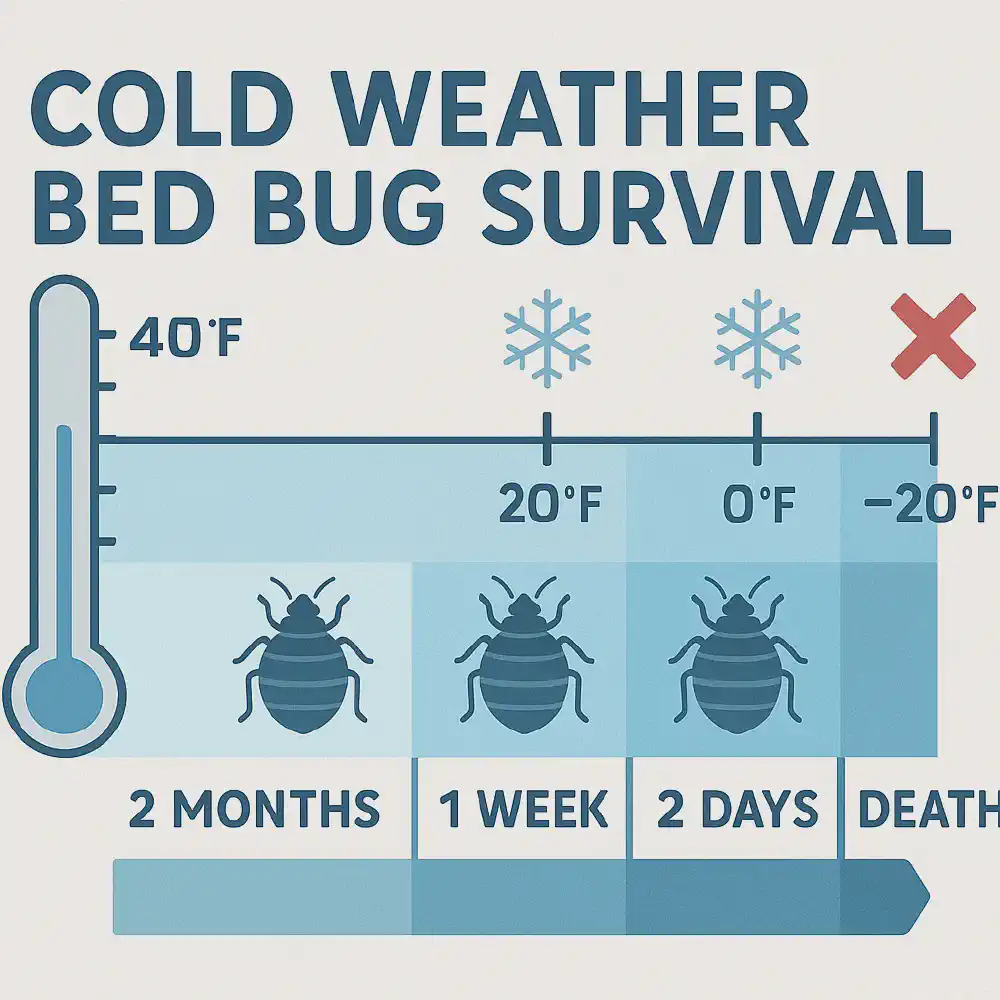
Bed bugs can survive in cold weather but only to a point. Their survival depends on how cold it is and how long they stay in that cold.
| Temperature | Survival Time | Effect on Bed Bugs |
| Above 32°F (0°C) | Indefinite | Active and feeding |
| 14°F (-10°C) | 1-2 days | Survive but stressed |
| 0°F (-18°C) | 3-4 days | Most die if exposure is continuous |
| -4°F (-20°C) | 1-2 days | Almost all die |
Cold Weather Myths
Many people believe cold weather kills bed bugs. They think freezing temperatures stop these pests.
This article explains common myths about bed bugs and cold weather. It also shows why freezing alone may not work.
Common Misconceptions
Some think bed bugs cannot survive winter outdoors. Others say cold kills all life stages of bed bugs.
- Bed bugs die instantly at freezing temperatures.
- Cold weather will clear infestations without help.
- Only heat treatments can remove bed bugs.
- Bed bugs do not hide in cold places.
Why Freezing Alone May Not Kill Them
Freezing can harm bed bugs, but it must be very cold and last long. Short cold exposure may not kill them.
| Temperature | Time Needed to Kill Bed Bugs |
| 0°C (32°F) | More than 7 days |
| -15°C (5°F) | 4 days or more |
| -20°C (-4°F) | 2 days or more |
Bed bugs can survive brief cold spells. They hide in warm places like furniture and walls.
Scientific Studies On Bed Bugs In Cold
Bed bugs are pests that live in warm places. People often wonder if cold weather kills them. Scientists have tested how bed bugs react to cold.
These studies help us understand if cold weather can control bed bug infestations. Researchers used both lab tests and real-world observations.
Lab Experiments
In labs, scientists expose bed bugs to cold temperatures. They check how long bugs survive at different cold levels. Bugs can survive short cold periods but die if cold lasts longer.
Some experiments show bed bugs survive just above freezing for hours. Lower temperatures or longer exposure cause death. Bugs in eggs and adults react differently to cold.
- Bed bugs survive few hours at 0°C (32°F)
- They die after days below -10°C (14°F)
- Eggs are usually more cold-resistant
- Sudden cold kills more bugs than gradual cooling
Field Observations
Scientists watch bed bug survival outside in cold weather. In homes, bugs hide in warm spots and avoid freezing. Cold alone rarely kills all bed bugs outdoors.
In cold climates, bed bugs still survive winter inside houses. They find places near heaters or inside furniture to stay warm. This means cold weather does not stop bed bugs fully.
- Bugs survive winter indoors in heated homes
- They hide in cracks and furniture to avoid cold
- Outdoor cold rarely kills bed bugs completely
- Bed bug infestations can return after winter

Credit: www.randrmagonline.com
Effective Cold Treatments
Cold treatments can help get rid of bed bugs. Lower temperatures stop their growth and kill them over time.
Using freezing methods safely is important to protect your items and ensure bed bugs die.
Freezing Items Safely
Not all items can handle freezing well. Some things may break or get damaged if frozen too long or too cold.
- Use airtight bags to protect clothing and fabrics.
- Place small items in sealed containers before freezing.
- Remove electronics or delicate items from the freezing process.
- Check item care labels for freezing warnings.
- Freeze items flat to avoid warping or bending.
Temperature And Exposure Time
| Temperature | Exposure Time | Effect on Bed Bugs |
| -5 °F (-20 °C) | 4 hours | Kills all bed bugs and eggs |
| 0 °F (-18 °C) | 24 hours | Ensures complete elimination |
| 32 °F (0 °C) | Several days | Slows activity, but may not kill all |
Freezing below 0 °F for at least 4 hours kills bed bugs. Longer times help if temperatures are higher.
Alternative Pest Control Methods
Bed bugs can survive cold weather, making control difficult. Using different methods helps remove them safely and effectively.
Here are some pest control options beyond cold treatment to fight bed bugs in homes or buildings.
Heat Treatments
Heat treatments kill bed bugs by raising room temperature to 120°F or higher. The heat penetrates furniture and walls to destroy all life stages of bugs.
- Use professional heaters or heat chambers for items
- Heat must reach all hiding spots for at least 90 minutes
- Safe for most household items and furniture
- Non-toxic and leaves no chemical residue
Chemical Solutions
Chemical pesticides are common but need careful use. They include sprays and dusts targeting bed bugs directly or their nests.
| Type | Use | Notes |
| Pyrethroids | Sprays for surfaces | Common but some bugs resist |
| Desiccants | Dusts that dry bugs | Works slowly, safe for pets |
| Neonicotinoids | Sprays and baits | Effective on resistant bugs |
| Insect Growth Regulators | Stops bug development | Prevents eggs from hatching |
Integrated Pest Management
Integrated Pest Management (IPM) uses several methods together for better results. It focuses on prevention, monitoring, and control with minimal chemicals.
- Inspect areas regularly for signs of bed bugs
- Use mattress covers and seal cracks
- Combine heat treatments and safe chemicals
- Vacuum frequently to remove bugs and eggs
- Educate occupants to reduce spread
Credit: www.kentucky.com
Preventing Bed Bug Infestations
Bed bugs can survive cold weather but do not like freezing for long periods. Preventing infestations is the best way to avoid problems at home or while traveling.
Use simple steps to keep these pests away. Early detection and careful habits reduce the risk of bringing bed bugs inside.
Tips For Travelers
Travelers can carry bed bugs in luggage or clothes. Check hotel rooms and luggage carefully to stop bugs from coming home.
- Inspect mattress seams and headboards in hotel rooms.
- Keep luggage off the floor and bed.
- Use a flashlight to look for small reddish bugs or spots.
- Seal clothes in plastic bags during travel.
- Wash and dry clothes on high heat after trips.
Home Inspection Techniques
Regular inspection helps catch bed bugs early. Use tools and check common hiding spots around your home.
| Area | What to Check |
| Mattress and box spring | Seams, tags, and under the fabric |
| Bed frame and headboard | Cracks and joints |
| Furniture | Under cushions and inside drawers |
| Baseboards and carpet edges | Small cracks and gaps |
| Electrical outlets | Remove covers carefully and check inside |

Credit: www.biotechtermiteandpest.com
Frequently Asked Questions
Can Bed Bugs Survive Freezing Temperatures?
Bed bugs can survive short periods of freezing but not prolonged exposure. Temperatures below 0°F (-18°C) for several days are needed to kill them effectively.
Do Cold Weather Stop Bed Bug Infestations?
Cold weather alone does not stop infestations. Bed bugs hide in warm indoor areas, so indoor heating often protects them from cold outside.
How Long Can Bed Bugs Live In Cold?
Bed bugs can live for weeks in cold conditions if not frozen solid. They enter a dormant state but survive until temperatures rise.
Can Freezing Kill Bed Bugs Completely?
Freezing can kill bed bugs if done properly. Items must be frozen at 0°F (-18°C) or lower for at least four days to ensure death.
Conclusion
Bed bugs do not easily die in cold weather. They can hide and stay alive for months. Cold alone does not kill them quickly. Freezing temperatures must last many days to work. You still need to clean and check your home.
Treating bed bugs early helps stop their spread. Staying alert is the best way to protect yourself. Cold weather is not a sure solution. Keep watching for signs and act fast.