Imagine a world where you could travel to distant galaxies in the blink of an eye. The idea of moving faster than light has fascinated scientists and dreamers alike for decades.
But what if you could actually experience this incredible speed? Can a human survive such a journey? You might be wondering if this is just the stuff of science fiction or if there’s a chance it could become a reality.
By diving into the world of physics and exploring the boundaries of our understanding, you’ll uncover the truth behind this captivating concept. Is it merely a theoretical possibility, or is there hope for such a groundbreaking leap in human travel? Keep reading to discover the surprising answers and satisfy your curiosity about this mind-bending topic.
Limits Of Light Speed
Understanding the limits of light speed is crucial when considering whether a human could survive traveling faster than light. Light speed is not just a number; it sets a fundamental boundary in our universe. Let’s break down why this limit exists and what it means for human survival beyond it.
Basics Of Light Speed
Light travels at approximately 299,792 kilometers per second in a vacuum. This speed is the fastest anything can move according to current physics. You might wonder why light speed is fixed and not just another fast number.
It’s important to realize that light speed acts like a cosmic speed limit. No object with mass can reach or exceed it because the laws of physics change drastically as you approach this speed.
Relativity And Its Impact
Einstein’s theory of relativity explains what happens when objects move near light speed. As speed increases, time slows down for the traveler relative to an outside observer. This effect, called time dilation, has been confirmed by experiments with fast-moving particles.
But this isn’t just a neat trick of time. Relativity also means your mass effectively increases as you get closer to light speed. This makes it harder to accelerate further, requiring more and more energy.
Why Light Speed Is A Barrier
Imagine trying to push a car that gets heavier the faster you push it. This is what happens as you near light speed. The energy required to keep accelerating grows without limit, making it impossible to reach or surpass light speed.
For humans, this isn’t just about physics equations. The forces and energy involved would be fatal long before you got close to light speed. Your body simply can’t handle the stresses or the extreme time distortions.
So, have you ever thought about what it really means to break the universe’s speed limit? The limits of light speed remind us that some boundaries aren’t just challenges—they’re fundamental rules of reality.
Credit: tvtropes.org
Physics Behind Faster-than-light Travel
Physics sets strict rules about speed and motion. According to Einstein’s theory of relativity, nothing with mass can reach or exceed the speed of light. The speed of light acts like a cosmic speed limit. Trying to go faster causes energy requirements to grow infinitely. This makes faster-than-light travel a huge challenge for humans and machines.
Scientists explore ideas beyond this limit by studying exotic particles and theoretical concepts. These ideas try to explain if faster-than-light travel could ever be possible. They blend physics, math, and imagination. Let’s look at some key concepts that shape the physics behind faster-than-light travel.
Tachyons And Hypothetical Particles
Tachyons are particles that always move faster than light. They have not been found, but they exist in theory. If tachyons were real, they would have strange properties. For example, they would gain speed when losing energy. They might allow signals to travel back in time. This breaks the usual rules of cause and effect. Scientists remain skeptical but curious about tachyons.
Warp Drives And Wormholes
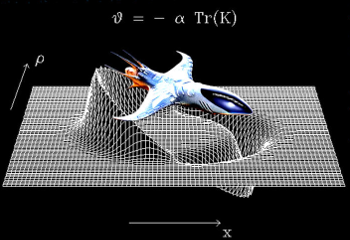
Warp drives and wormholes come from Einstein’s equations. A warp drive would squeeze space in front and stretch it behind. This lets a ship move faster than light without breaking physics rules. Wormholes are shortcuts through space and time. They connect two distant points instantly. Both ideas are theoretical and need exotic matter with negative energy. This matter is not proven to exist yet.
Quantum Mechanics Insights
Quantum mechanics studies the tiny particles that make up the universe. It shows strange effects like entanglement, where particles influence each other instantly. Some think this might allow faster-than-light communication. Yet, quantum theory forbids sending usable information faster than light. Quantum tunneling lets particles cross barriers quickly, but not faster than light. The quantum world challenges many physics ideas but keeps the light speed limit intact.
Biological Effects On Humans
Traveling faster than light is a captivating idea, but what happens to your body if you actually reach such speeds? The biological effects on humans could be far beyond anything we currently understand. Your body isn’t just a machine—it’s a complex system sensitive to extreme conditions, and pushing it past light speed would challenge every part of it.
Impact Of Extreme Speeds On The Body
At speeds close to or beyond light, the forces acting on your body would be immense. Your organs, muscles, and bones would experience intense stress from sudden acceleration or deceleration. Even if a spacecraft could protect you from the vacuum of space, your body might still suffer from crushing g-forces that could cause severe damage or instant unconsciousness.
Think about how pilots train for high-speed maneuvers—g-forces can cause blackouts in seconds. Now imagine forces many times stronger. Could your heart keep pumping? Would your blood flow normally? These are critical questions because your body’s survival depends on maintaining stable internal functions.
Radiation And Energy Exposure
Moving faster than light means you’d be exposed to unprecedented levels of cosmic radiation and energetic particles. At such speeds, particles that normally pose little threat become lethal. Your DNA could suffer continuous damage, increasing the risk of cancers and other genetic mutations.
Your body’s natural defenses against radiation might be overwhelmed. Even with shielding, some particles might penetrate and cause cellular breakdown. Have you ever wondered how astronauts cope with radiation on the International Space Station? Now imagine radiation levels many thousands of times higher.
Time Dilation And Aging
Time dilation is a well-known concept from relativity, where time slows down as you approach light speed. For you, this might sound like a bonus—aging slower while the universe ages faster. But it comes with consequences.
If you travel faster than light, strange effects on your biological clock could occur. Your body’s processes might become desynchronized with the outside world. Would you age slower or faster? Could this affect your mental and physical health? These questions challenge what we understand about life itself.

Credit: medium.com
Scientific Experiments And Theories
Exploring whether humans can survive traveling faster than light pushes the boundaries of both science and imagination. Scientists have designed experiments and theories to understand the limits of speed and what happens as objects approach the speed of light. Let’s look at some key experiments and ideas that shape our understanding.
Particle Accelerators And Speed Tests
Particle accelerators like the Large Hadron Collider (LHC) push subatomic particles close to the speed of light. These tiny particles reach speeds over 99.999% of light speed without breaking physical laws. Yet, despite this incredible velocity, no particle has been observed to exceed light speed.
These experiments show how energy requirements increase dramatically as speed nears light speed. This reveals a huge challenge for any object with mass, including humans, to break the light-speed barrier. Have you ever wondered what would happen if you could speed up like these particles?
Theoretical Models For Ftl Travel
Scientists have proposed various theoretical models to imagine faster-than-light (FTL) travel. Concepts like wormholes and the Alcubierre drive suggest ways to bypass the light-speed limit without violating physics. These ideas rely on bending or warping space-time rather than moving through it faster than light.
However, these models often require exotic materials or energy forms that we have not yet discovered or created. This raises the question: can your future spaceship really use such exotic physics, or will it remain science fiction?
Challenges In Experimental Proof
Proving FTL travel experimentally is incredibly difficult due to the laws of physics and technological limits. No experiment to date has shown any particle or object with mass moving faster than light. Even tiny neutrinos, once thought to possibly exceed light speed, were later found to be mistaken due to measurement errors.
Could future technology overcome these hurdles, or are these challenges insurmountable? Until then, the idea of humans surviving faster-than-light travel remains speculative and beyond our current experimental reach.
Practical And Technological Barriers
Traveling faster than light remains a dream beyond current human reach. Many practical and technological barriers block the path. Science fiction often shows faster-than-light travel, but real-world physics sets strict limits. Understanding these barriers highlights why humans cannot yet achieve such speeds.
Current Technology Limitations
Our spacecraft use rockets powered by chemical fuels. These fuels cannot reach anywhere near light speed. Existing engines lack the power to push objects so fast. Materials used in spacecraft would break down under extreme stress. No known technology can protect humans at such high speeds.
Energy Requirements
Speed near light needs enormous energy. The faster an object moves, the more energy it requires. To reach light speed, energy demands become infinite. Current energy sources cannot supply such massive power. Even futuristic sources like nuclear fusion fall short.
Safety Concerns For Human Travel
At extreme speeds, tiny particles can cause huge damage. Collisions with space dust or debris pose deadly risks. The human body cannot withstand intense acceleration forces. Radiation exposure increases dramatically outside Earth’s protection. Life support systems must work perfectly in harsh conditions.

Credit: www.reddit.com
Speculations And Future Possibilities
Speculations about humans traveling faster than light spark curiosity and wonder. Science fiction often explores this idea, but real science has many challenges to solve. Scientists dream of future technologies that might change what seems impossible today. These possibilities open new paths for research, breakthroughs, and deep questions about our place in the universe.
Emerging Research Directions
Scientists study exotic concepts like warp drives and wormholes. These ideas involve bending space or creating shortcuts through it. Quantum physics also offers clues about faster-than-light effects. Experiments with entanglement and particle behavior push the boundaries of knowledge. Researchers test theories that might one day lead to new forms of travel.
Potential Breakthroughs
New materials and energy sources could help overcome current limits. Advances in propulsion technology aim to reach speeds close to light. Discoveries in dark energy and space-time might reveal hidden paths. Breakthroughs often come from unexpected areas of science. Progress depends on creativity, persistence, and collaboration across fields.
Philosophical And Ethical Questions
Faster-than-light travel raises deep questions about time and reality. Could humans handle the effects of such travel on the body and mind? What happens to causality and the flow of events? Ethical concerns include safety, fairness, and the impact on society. These questions invite us to think carefully about future choices.
Frequently Asked Questions
Can Humans Physically Travel Faster Than Light?
No, humans cannot travel faster than light. According to Einstein’s theory of relativity, surpassing light speed requires infinite energy, which is impossible with current physics.
What Happens To The Human Body Near Light Speed?
At speeds close to light, time dilation occurs, and the body experiences extreme relativistic effects. However, traveling faster than light is currently beyond human capability and survival.
Is Faster-than-light Travel Scientifically Possible?
Faster-than-light travel remains theoretical and unproven. Concepts like warp drives are speculative and face enormous technological and physical challenges.
Could Light Speed Travel Harm Humans?
Yes, extreme speeds near light could cause harmful radiation and physical stresses, making survival highly unlikely during such travel.
Conclusion
Traveling faster than light remains beyond human reach today. Science shows many limits and risks involved in such speed. Our current technology cannot support human survival at that velocity. The laws of physics create strong barriers we cannot break yet.
Future discoveries might change this, but for now, it stays a dream. Exploring space continues safely within these limits. Curiosity keeps pushing us forward, slowly but surely. The idea sparks imagination and wonder about the universe. For now, humans must travel slower than light to survive.