How Cold is Too Cold for Your Newborn Puppy?
How cold is too cold for newborn puppies? It's the question that keeps every new breeder up at night, and the answer isn't a single number. A puppy's ability to handle cold changes dramatically during the first month of life, and what's safe for a two-week-old can be fatal for a two-day-old.
Getting this wrong can lead to fading puppy syndrome or death within hours.
According to the Merck Veterinary Manual, a newborn's rectal temperature can drop below 94°F (34.4°C) in a room that feels comfortably warm to us. That's the threshold where hypothermia sets in and the puppy's organs start to shut down. Understanding why that happens starts with looking at how a newborn puppy's body works, or rather, how it doesn't.

Image source: Bing (Web (fair-use with source credit))
Why Puppies Are So Vulnerable to Cold
A newborn puppy enters the world with almost no ability to keep itself warm. Unlike a human baby, a neonate cannot shiver effectively. It cannot crawl away from a cold spot.
Its body is essentially a small, wet heat sink that loses warmth to the air the moment it's born.
The first reason is metabolic. Puppies are born with very little body fat and almost no glycogen reserves in their liver. They rely on a special type of brown fat to generate heat, but that supply is tiny and burns through quickly.
Without a constant external heat source, a puppy's core temperature can plummet in under an hour.
The second reason is neurological. The part of a puppy's brain that regulates body temperature, the hypothalamus, is immature at birth. It simply doesn't send the right signals to constrict blood vessels or increase metabolic rate.
That means a cold puppy doesn't even realize it's cold until it's already in trouble.
How Cold Is Too Cold — The Exact Temperature Thresholds
The Two Numbers You Must Know
There are two temperature ranges you need to memorize. The first is the puppy's core body temperature. The second is the ambient air temperature in the whelping area.
Both matter, but they tell you different things.
A healthy newborn's rectal temperature during the first few days of life sits between 92°F and 97°F (33.3°C to 36.1°C). That feels cool to our touch, but it's normal for them. Once that reading drops below 94°F (34.4°C), you're in hypothermia territory.
Below 88°F (31.1°C), the risk of cardiac arrest and death rises sharply.
Why Room Temperature Can Be Deadly for a Newborn
Most homes sit around 68°F to 72°F (20°C to 22°C). That's perfectly comfortable for us, but for a day-old puppy, it's a killing floor. A newborn needs an ambient temperature of 85°F to 90°F (29.5°C to 32.2°C) during its first week.
That's warmer than a summer day.
The gap between what we find comfortable and what a puppy needs is why so many well-meaning owners accidentally chill their litters. A room that feels "nice and warm" to you can still be 15 degrees too cold for a neonate.
| Temperature | What It Means for a Newborn Puppy |
|---|---|
| 92–97°F (33.3–36.1°C) rectal | Normal core range for the first few days |
| Below 94°F (34.4°C) rectal | Hypothermia begins, intervention needed |
| Below 88°F (31.1°C) rectal | Critical danger, high risk of death |
| 85–90°F (29.5–32.2°C) ambient | Safe zone for week one |
| 70–75°F (21–24°C) ambient | Safe only from week four onward |
How a Newborn's Body Handles Cold (And Why It Fails)
The First Week: Zero Self-Regulation
During the first seven days, a puppy is entirely dependent on its environment for warmth. It cannot shiver. It cannot move to a warmer spot.
Its blood vessels stay wide open, dumping heat into the air. If the ambient temperature drops, the puppy's core temperature drops right along with it.
This is why a draft or a cold floor can be so dangerous. A puppy lying on a tile floor can lose heat through conduction faster than it can produce it. Even a slight breeze from an open door can accelerate heat loss through evaporation, especially if the puppy's coat is still damp from birth.
Weeks Two to Four: A Slow Climb Toward Stability
Around day eight, things start to shift. The puppy's nervous system begins to mature. It starts to develop a weak shiver response.
Its brown fat stores increase slightly. By the end of the third week, it can begin to regulate its own temperature to a small degree.
But that doesn't mean it's safe to drop the heat. A three-week-old puppy still can't handle a normal room temperature. It just won't die as quickly.
The ambient target steps down gradually, from 80, 85°F in week two to 75, 80°F in week three. Only by week four can you let the room cool to a standard 70, 75°F.
How to Measure Temperature Properly (It's Not the Ears)
Rectal Temperature: The Only Reliable Method
If you want to know whether a puppy is too cold, you need to take its core temperature. Ear thermometers, infrared guns, and skin readings are unreliable on neonates. The only accurate way is with a digital rectal thermometer.
Use a fast-read digital thermometer designed for pets. Lubricate the tip with a water-based lubricant. Gently insert it no more than half an inch into the puppy's rectum.
Wait for the beep. A reading below 94°F means you need to act immediately.
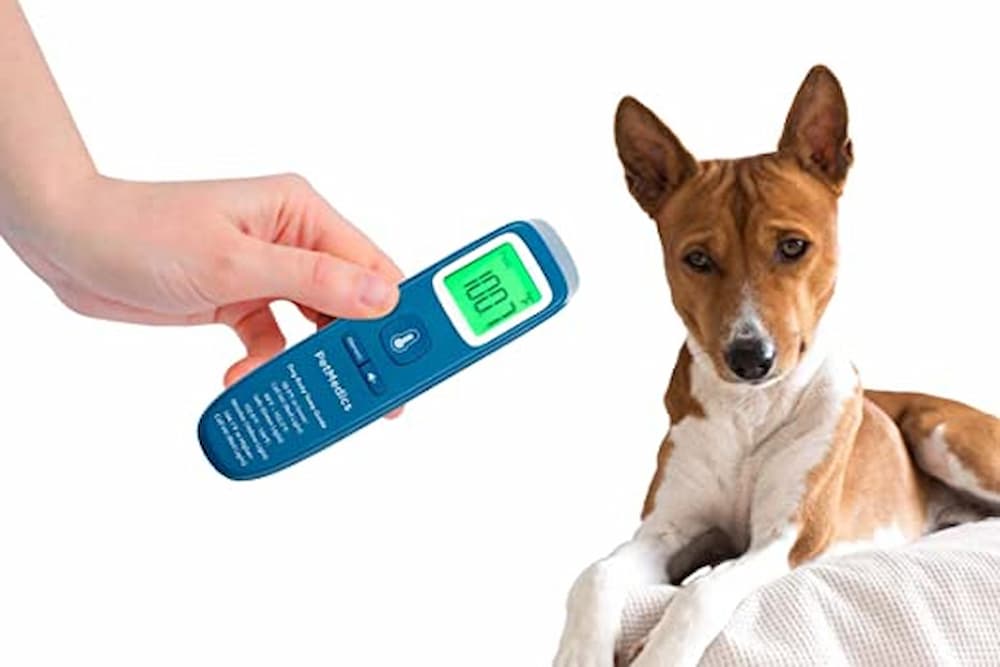
Image source: Bing (Web (fair-use with source credit))
Ambient Temperature: Reading the Room
Don't rely on the thermostat down the hall. Place a digital thermometer right inside the whelping box, at puppy level. Check it several times a day.
A drop of just a few degrees during the night can push a vulnerable puppy over the edge.
If you're using a heating pad or heat lamp, monitor the temperature gradient. The warm side should hit the target, but the cool side must never drop below the minimum safe ambient for that week. A puppy that can't escape the heat is just as much at risk as one that can't find warmth.
The Signs of Chilling Before It Becomes an Emergency
Subtle Warning Signs (Act Now)
A cold puppy won't always look cold. The earliest signs are behavioral. Watch for a puppy that stops nursing and lies still.
It may cry weakly or not at all. Its ears and paws might feel cool to your touch, but that alone isn't a reliable indicator.
A more telling sign is a puppy that's separated from the litter. Puppies huddle together for warmth. If one is off by itself, it may already be too cold to compete for a spot near the dam.
Pick it up. If it feels cool or limp, take its temperature right away.
Critical Signs (Veterinary Emergency)
When a puppy's core temperature drops below 90°F, the situation becomes dire. The puppy may become unresponsive. Its gums turn pale or blue.
Its heart rate slows to a dangerous crawl. Breathing becomes shallow and irregular.
At this stage, the puppy needs veterinary intervention fast. You can begin safe rewarming at home, but if the puppy doesn't improve within 30 minutes, it needs injectable warmth and fluids that only a vet can provide. Don't wait.
A puppy that cold is minutes away from organ failure.
Setting Up the Right Heat Source
Safe Heat Sources for a Whelping Area
Not all heat is created equal. The goal is steady, controllable warmth that won't burn or overheat the puppies. A heating pad designed for reptiles or pets, set under half the whelping box, is one of the most reliable options.
It gives puppies a warm zone and a cooler zone so they can move away if they get too hot.
Overhead ceramic heat emitters are another solid choice. They produce no light, just warmth, and they don't cycle on and off like a heat bulb. Pair one with a thermostat probe taped to the floor of the box, and you've got a system that self-regulates.
Just make sure the fixture is secured well out of reach of the dam.
Dangerous Heat Sources People Use Anyway
Ordinary electric blankets are a hard no. Most don't have precise thermostats, and if a puppy chews through the fabric, you've got a live wire and a burn risk. Microwaveable gel packs seem convenient, but they cool down fast and create hot spots that can scorch a puppy's thin skin.
Heat lamps without a cage guard are a fire hazard. Even with a guard, an unsecured bulb can fall into the bedding and ignite it. If you use a lamp, hang it from a chain and check it several times a day.
The American Animal Hospital Association guidelines emphasize that any heat source used unattended must have a thermostat and overheat protection.
Step-by-Step: Weekly Temperature Targets for Weeks 1–4
Week 1: 85–90°F (29.5–32.2°C)
The first seven days are the most critical. Newborns cannot regulate their body temperature at all. Keep the whelping box at the higher end of this range for the first 72 hours, then you can settle around 85°F.
A digital thermometer at puppy level is non-negotiable.
Week 2: 80–85°F (26.7–29.5°C)
Around day eight, puppies start to develop a primitive shiver response. You can begin to step the temperature down, but keep it above 80°F. Watch the litter's behavior.
If they're piling up in one corner, they're probably cold. If they're spread out flat, they might be too warm.
Week 3: 75–80°F (23.9–26.7°C)
By now the puppies are more mobile and can move toward or away from heat. You can drop the ambient temperature further, but never below 75°F. This is also when you might notice the dam spending more time away from the box.
That's normal, but the puppies still need supplemental heat.
Week 4 Onward: 70–75°F (21–24°C)
Once puppies hit four weeks, their thermoregulation is much closer to an adult dog's. You can safely lower the temperature to normal room range. That doesn't mean you should remove the heat source entirely overnight.
A gradual transition is safer than a sudden change.
Rewarming a Chilled Puppy Safely
The 1–2°F Per Hour Rule
This is where many people make a dangerous mistake. If you find a puppy with a rectal temperature of 90°F, your instinct will be to blast it with heat. That's the worst thing you can do.
Rapid rewarming can cause blood vessels in the skin to dilate suddenly, dropping blood pressure and sending the puppy into shock.
The safe rate is to raise the core temperature by about 1°F to 2°F per hour. Wrap the puppy in a warm towel that's been in the dryer. Hold it against your body.
Place it on a heating pad set to low, but always with a towel barrier between the pad and the puppy. Check the rectal temperature every 15 to 20 minutes.
What Never to Do When Rewarming
Never submerge a cold puppy in warm water. You can't control the temperature precisely, and you risk burning the skin or causing a rapid temperature spike. Never place a puppy directly on a hot surface.
Their skin is thin and burns easily. And never feed a cold puppy. Their digestive system shuts down when they're hypothermic, and formula can ferment in the stomach.
If the puppy won't nurse after rewarming, that's a vet emergency. It may need subcutaneous fluids or a glucose drip to recover.
When to Call the Vet Immediately
Some situations go beyond home care. If a puppy's rectal temperature drops below 85°F, it's in the danger zone. Organs are beginning to fail.
If the puppy is unresponsive, limp, or has a heart rate below 150 beats per minute, don't wait. Call your vet or an emergency clinic right away.
Another red flag is a puppy that won't nurse even after warming. That could mean it's septic, or it could be a sign of fading puppy syndrome. A vet can check for hypoglycemia, dehydration, and congenital issues.
Time matters. A puppy that cold can deteriorate in minutes.
What Happens at Different Temperatures — A Quick Reference
At 92°F rectal, a puppy is normal and comfortable. At 90°F, it's lethargic and may stop nursing. At 85°F, the heart rate drops and breathing becomes irregular.
Below 80°F, the puppy is comatose and the chances of survival are slim without veterinary intervention.
On the ambient side, if the room drops to 75°F during the first week, a newborn will start losing heat within an hour. At 65°F, that same puppy could be in critical hypothermia within two hours. The numbers don't leave much room for error, and that's why a reliable heat source and constant monitoring are essential.
The Role of Humidity and Draft Control
Humidity matters more than most people realize. Puppies lose moisture through their skin and respiratory tract, especially in a warm whelping box. If the air is too dry, they can dehydrate quickly.
Aim for 55 to 65 percent humidity. A simple hygrometer, the kind you'd use for a reptile enclosure, will tell you where you stand.
Drafts are another silent killer. A box near a door or window can have cold spots that the thermometer misses. Even a small breeze can strip heat from a newborn's body.
Place the whelping box in an interior room away from exterior walls if possible. If you're in a cold climate, insulate the outside of the box with towels or foam board.
Final Checklist: Is the Environment Safe Right Now?
Before you leave the whelping area, run through this quick list. Is the heat source thermostatically controlled? Is there a temperature gradient so puppies can move away from the heat?
Is the thermometer at puppy level, not up on a wall? Are all electrical cords completely out of reach? Is the humidity in the 55 to 65 percent range?
If you can't answer yes to all of those, fix it now. A newborn's margin for error is razor-thin, and the first week is unforgiving. When in doubt, check the puppy's rectal temperature.
That number tells you the truth.
Frequently Asked Questions
Can newborn puppies survive at room temperature?
Not for long. A standard room temperature of 68 to 72°F is dangerously cold for a day-old puppy. By week four, they can tolerate it, but during the first week they need 85 to 90°F to survive.
What's the best way to keep a whelping box warm?
A thermostatically controlled heating pad under half the box, paired with a digital thermometer at puppy level, is the safest and most consistent method. Overhead ceramic heat emitters with a thermostat probe are also reliable.
How do I know if my puppy is too cold?
Stop nursing, lethargy, crying weakly, and lying away from the litter are early signs. A rectal temperature below 94°F confirms hypothermia. Below 88°F is a life-threatening emergency.
Is it possible to overheat newborn puppies?
Absolutely. Overheating causes dehydration, heat stress, and can be just as deadly as cold. Always provide a cool zone in the box so puppies can escape the heat.
Never let the ambient temperature climb above 90°F.
What temperature should the whelping box be at night?
The same as during the day. Temperature must remain stable 24 hours a day during the first week. Nighttime drops in ambient room temperature can push the box into the danger zone, so monitor it just as closely.
How long can a newborn puppy survive in cold conditions?
In a 65°F room, a day-old puppy can become critically hypothermic within one to two hours. Survival time drops fast as the core temperature falls. Once it hits 80°F rectal, the puppy has minutes, not hours.