Do Bed Bugs Survive in Cold Weather: Shocking Truth Revealed
Are you worried about bed bugs invading your cozy space, even when the temperature drops? You’re not alone.
Many believe that the chill of winter acts as a natural deterrent to these pesky invaders. But is that really true? Do bed bugs survive in cold weather, or is it just a myth? Understanding how these tiny nuisances behave in lower temperatures can make a big difference in how you protect your home.
Imagine finally having the peace of mind knowing that your efforts to keep them at bay are truly effective. Dive into this article to uncover the truth about bed bugs and cold weather—because your comfort and peace of mind matter.
Bed Bug Biology And Cold Tolerance
Bed bugs are small insects that feed on blood. They often hide in homes and beds. Understanding their biology helps to know how cold affects them.
Cold weather can slow down bed bugs, but it does not always kill them. Their ability to survive cold depends on their life stage and exposure time.
Life Cycle Of Bed Bugs
Bed bugs go through several stages in their life cycle. Each stage has different cold tolerance levels.
- Egg: Small and fragile, less tolerant to cold.
- Nymph: Young bed bugs that need blood meals to grow.
- Adult: Fully grown, can survive longer in cold than eggs or nymphs.
How Bed Bugs React To Cold
Bed bugs slow their movement in cold temperatures. They become less active and feed less often.
| Temperature Range | Bed Bug Behavior |
| Above 50°F (10°C) | Active, feed regularly |
| 32°F to 50°F (0°C to 10°C) | Slowed movement, less feeding |
| Below 32°F (0°C) | Enter dormancy, movement stops |
Limits Of Cold Survival
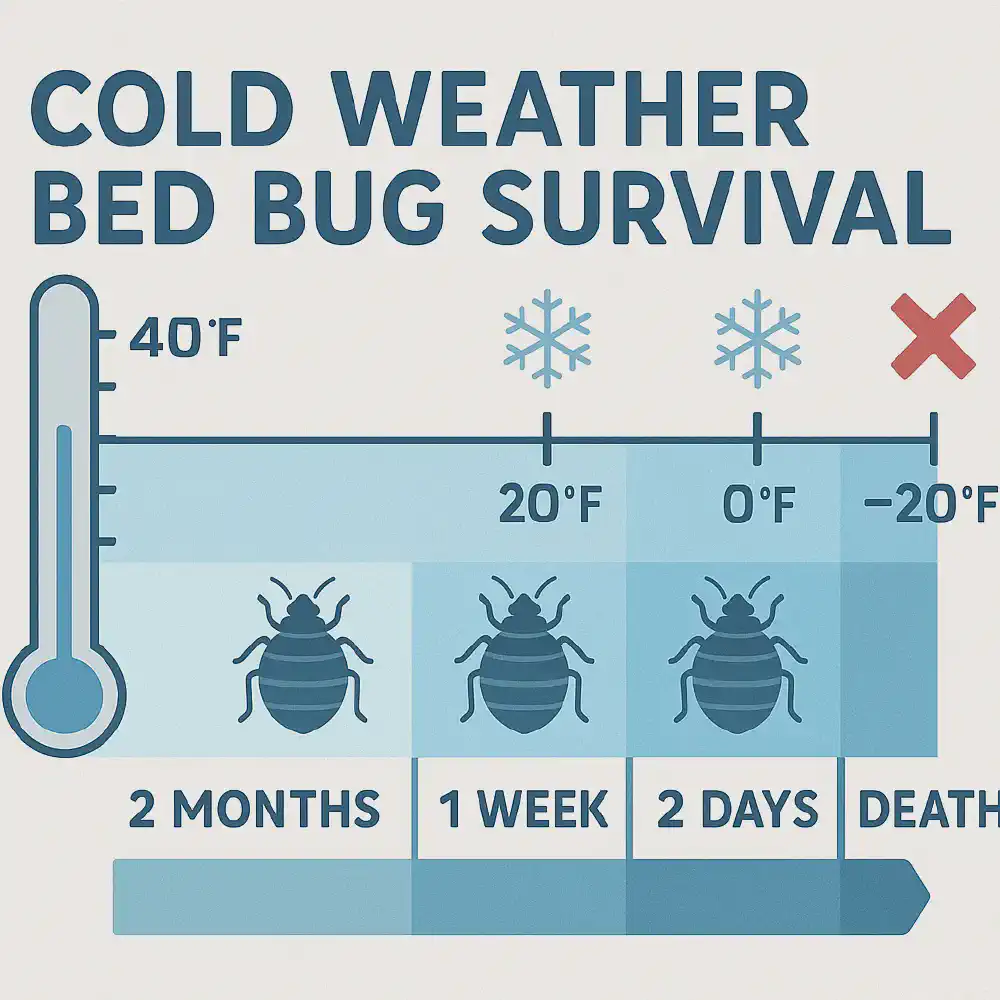
Bed bugs cannot survive very low temperatures for long. Their survival depends on how cold it gets and how long they stay cold.
- Short cold exposure (a few hours): Most bed bugs survive.
- Moderate cold exposure (days): Many bed bugs die, but some survive.
- Extended cold exposure (weeks): Most bed bugs die, including adults.

Credit: www.randrmagonline.com
Effects Of Cold On Bed Bug Behavior
Cold weather affects how bed bugs act and survive. These small pests change their habits to cope with low temperatures.
Understanding their behavior in cold helps control infestations better. It shows how they stay alive and active.
Dormancy And Activity Levels
Bed bugs enter dormancy when it gets cold. They slow down their movements to save energy.
During dormancy, bed bugs hide in cracks and crevices. They stay still for long periods until temperatures rise.
Impact On Feeding Habits
Cold reduces bed bugs’ need to feed. They eat less because their bodies use less energy.
Lower feeding means fewer bites on humans. Bed bugs wait for warmer conditions before seeking blood again.
Reproductive Changes
Cold weather slows down bed bug reproduction. Females lay fewer eggs or stop laying eggs completely.
Egg development takes longer in the cold. This delay helps bed bugs survive tough times until it warms up.
Cold Weather Myths About Bed Bugs
Many people believe cold weather kills all bed bugs. This idea causes some to ignore infestations during winter. Bed bugs are tough and can survive cold temperatures better than you think.
This article looks at three common myths about bed bugs and cold weather. It explains what really happens when temperatures drop.
Freezing Kills All Bed Bugs
Freezing can kill bed bugs, but it does not happen at normal winter temperatures. Bed bugs need to be exposed to very low temperatures for several days. A quick freeze or a mild cold will not stop them.
- Freezing must reach at least -17°C (1°F)
- Exposure time should be four days or more
- Normal home freezers may not be cold enough
- Bed bugs can hide in warm places to survive
Winter Naturally Eliminates Infestations
Many assume winter kills bed bugs outside the home. This is not true. Bed bugs hide in protected places indoors. Winter cold rarely reaches these hiding spots. Infestations can continue through the season.
| Location | Temperature in Winter | Bed Bug Survival |
| Inside walls | Above freezing | High |
| Under furniture | Above freezing | High |
| Outdoors | Below freezing | Low |
| Heated rooms | Warm | Very High |
Cold Stops Bed Bug Spread
Cold weather does not stop bed bugs from spreading. Bed bugs move by hitchhiking on people and belongings. Cold weather does not affect this behavior. They can spread anytime if people travel or move infested items.
Tips to prevent bed bug spread in cold weather:
- Check luggage after travel
- Inspect secondhand furniture
- Wash and dry clothes on high heat
- Use protective covers on mattresses
Effective Cold Treatments For Bed Bugs
Bed bugs can survive cold weather, but freezing can kill them if done right. Cold treatments are a safe way to remove bed bugs from items without chemicals.
Using cold to treat bed bugs needs the right temperature and time. This guide explains how to freeze items safely and use cold chambers effectively.
Freezing Items Safely
Freezing is a common method to kill bed bugs on small items. Place infested items in a sealed plastic bag. This prevents moisture damage during freezing.
Use a freezer that reaches at least -18°C (0°F). Keep items in the freezer long enough to kill all bed bugs and eggs inside.
- Seal items in plastic bags
- Use a freezer at or below -18°C (0°F)
- Do not overcrowd the freezer for even cooling
Using Cold Chambers
Cold chambers are special freezers designed to treat many items at once. They keep a constant low temperature for effective pest control.
These chambers can freeze furniture, clothing, and bedding safely. They help remove bed bugs without using chemicals or heat.
- Hold large items for long exposure
- Maintain stable temperatures below freezing
- Allow safe treatment of delicate materials
Temperature And Exposure Time
Bed bugs die at very low temperatures if exposed long enough. The key is keeping items cold for the right time.
Below -18°C (0°F), bed bugs need 4 days or more to die. At colder temperatures, like -25°C (-13°F), 24 hours may be enough.
| Temperature | Exposure Time |
|---|---|
| -18°C (0°F) | 4 days |
| -25°C (-13°F) | 24 hours |
| -30°C (-22°F) | 12 hours |
Combining Cold With Other Control Methods
Cold temperatures alone do not always kill bed bugs. Using cold with other methods gives better results. Different treatments help control bed bugs in many ways.
Combining several control techniques increases the chance of fully removing bed bugs from homes or buildings.
Heat Treatments
Heat treatments use high temperatures to kill bed bugs and their eggs. Heat can reach places cold cannot affect. It is fast and effective when done right.
- Heat kills bed bugs in all life stages
- It works well in furniture and mattresses
- Heat treatments require professional equipment
- Combining heat and cold helps cover all bed bug hiding spots
Chemical Controls
Chemical controls use pesticides to kill bed bugs. These chemicals reach bugs hiding in cracks and crevices. They work best when used with other methods.
| Type | Purpose |
| Residual Sprays | Kill bed bugs on contact and remain active for days |
| Insect Growth Regulators | Stop bed bugs from maturing or reproducing |
| Dusts | Apply in wall voids and hard-to-reach places |
Integrated Pest Management
Integrated Pest Management (IPM) combines many control methods. It uses inspection, monitoring, and a mix of treatments to fight bed bugs. IPM lowers pesticide use and improves safety.
- Inspect and identify bed bug infestations
- Use heat and cold treatments to reduce populations
- Apply chemical controls carefully
- Use physical barriers and cleaning to prevent spread
- Monitor regularly to catch new infestations early

Credit: www.biotechtermiteandpest.com
Preventing Bed Bug Infestations Year-round
Bed bugs can survive cold weather but controlling them needs steady care. Taking steps all year helps keep them away. Learning how to spot and stop them is key.
This guide shares simple ways to inspect, travel safely, and maintain your home. Use these tips to protect your space from bed bugs anytime.
Regular Inspection Tips
Check your home often to catch bed bugs early. Look closely at mattress seams, furniture joints, and cracks in walls. Early detection stops big problems.
- Inspect beds and couches weekly
- Use a flashlight to see dark corners
- Look for small rust-colored spots
- Check luggage and clothing after trips
- Seal cracks where bugs can hide
Travel Precautions
Bed bugs spread easily through travel. Protect yourself by checking hotel rooms and keeping luggage off the floor. Clean clothes and bags after trips.
| Precaution | Action |
| Room Inspection | Check mattress edges and headboard |
| Luggage Placement | Use racks, avoid floors and beds |
| Clothing Care | Wash in hot water after trip |
| Luggage Cleaning | Vacuum and wipe down bags |
Home Maintenance Strategies
Keep your home less friendly to bed bugs by cleaning and fixing damage. Removing clutter cuts places to hide. Use protective covers on mattresses to block bugs.
- Vacuum floors and furniture weekly
- Repair peeling wallpaper and cracks
- Declutter rooms and storage areas
- Use mattress and box spring covers
- Wash bedding in hot water regularly
Credit: moxieservices.com
Frequently Asked Questions
Can Bed Bugs Survive Freezing Temperatures?
Bed bugs can survive short periods of freezing but usually die after prolonged exposure below 0°F (-18°C). Extreme cold for several days is needed to effectively kill them.
Do Cold Winters Kill Bed Bugs Naturally?
Cold winters alone rarely kill bed bugs indoors. They hide in warm places, making natural cold ineffective against infestations inside homes.
How Low Must Temperature Be To Kill Bed Bugs?
Temperatures must reach at least 0°F (-18°C) and stay that way for 3-4 days to kill bed bugs and their eggs effectively.
Can Bed Bugs Hibernate During Winter?
Bed bugs do not hibernate but can enter a dormant state. They survive cold by hiding in heated areas, avoiding freezing temperatures.
Conclusion
Bed bugs can survive cold weather but not extreme cold for long. They hide in warm places like beds and walls. Cold alone won’t get rid of them. Use other methods like cleaning and pest control to fight bed bugs.
Stay alert and act fast if you see signs of these pests. Protect your home and sleep well without worries.